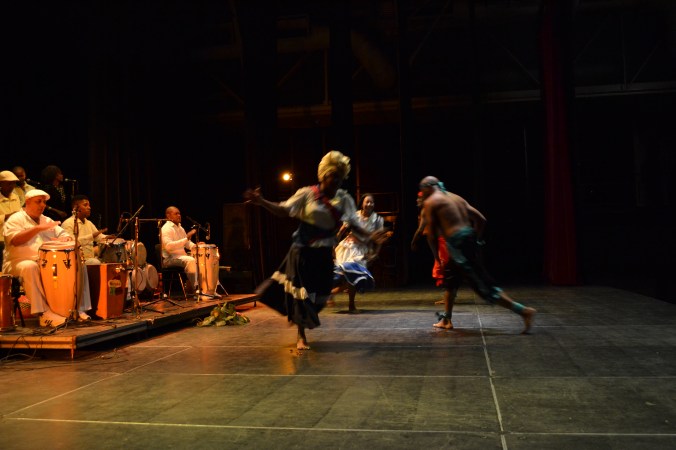
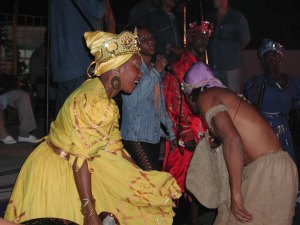
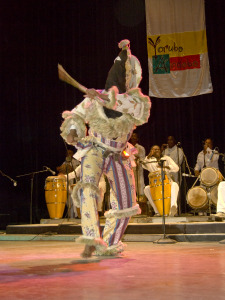
Obatala initiates, Pierre Verger Trinidad’s Obatala day is here again, and there are beautiful photos of the procession already. Scroll down for the best photos ! And from a Trinidad newspaper , an article about the spirit behind the festival “For the past decade, Trinidadian Oloye Esabenjo Efag Oriyomi Orisagbemi has brought the Obatala…
Yoruba
Adelante – Rumbatéate: telegrafía sin hilo de la música cubana (+Galería)
La Plaza de los Trabajadores se reserva para la tarde rumbera, viernes y sábado desde las 4:00 p.m.; y la Plaza de San Juan de Dios, para las descargas, hoy a partir de las 9:00 p.m., y mañana, media hora antes.
Rumbatéate concluirá el 12 de junio con el Rumbón Sagrado, de 3:00 p.m. a 11:00 p.m. en el Club universitario El Bosque, con la participación de las agrupaciones invitadas Ochareo (Cienfuegos), Rumbávila (Ciego de Ávila), Abbó Aché (Santa Clara), Muñequitos de Matanzas, Yoruba Andabo (La Habana) y Rumbatá.
via Adelante – Rumbatéate: telegrafía sin hilo de la música cubana (+Galería)
Noticias de Prensa Latina – Lamentan deceso del rumbero cubano Geovani del Pino
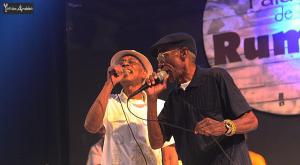
La Habana, 23 may (PL) El movimiento de la rumba cubana lamenta hoy la muerte de Geovani del Pino, fundador y director del grupo Yoruba Andabo.
El cantante, percusionista, compositor y productor musical falleció en la madrugada de este domingo a los 74 años de edad a causa de un accidente cerebrovascular.
Genuino artista popular, emergió en los muelles de La Habana en la década de 1960 hasta que el influjo de los cantos y toques de las músicas rituales de origen africano lo conminó a crear Yoruba Andabo en 1985.
Su impronta se extendió a una multipremiada discografía y hasta diversas plazas culturales de Cuba, México, Venezuela, Colombia, Costa Rica, Panamá, España, Estados Unidos, Canadá, Italia, Suiza y Francia.
Reconocido ícono de la tradición rumbera Geovani del Pino contribuyó además al programa de la Ruta de la Rumba y los Festivales Internacionales Timbalaye, organizados con la anuencia de la Unión de Escritores y Artistas de Cuba.
Días atrás, Del Pino y Yoruba Andabo consiguieron el Premio Cubadisco 2016 en la categoría de Música Tradicional Afrocubana por la placa titulada Soy de la tierra brava
via Noticias de Prensa Latina – Lamentan deceso del rumbero cubano Geovani del Pino
A Young Iyalorisa Tells Us The Role Of Dance and Song In Yoruba Spirituality – theyoruba
A Young Iyalorisa Tells Us The Role Of Dance And Song In Yoruba Spirituality
Yoruba Religion – May 5, 20160My name is Egbelade Omitonade Ifawemimo. I practice African Traditional Religion, Yemoja worshipper. I am Yemoja priestess which also versed in Ifa, Researcher, Theologian. I am a graduate of Obafemi Awolowo University where I studied Economics Education, Ile Ife, Osun State. I am from Ibadan, Oyo State, Nigeria.
In Yoruba culture, songs and dance have so much importance to religious worship and spirituality. All Orisas holds particular importance in dance and songs. And Worship in African Traditional Religion take the form of rites and ceremonies and include prostrating, praying, invoking, and making offerings. Sounding the bell or gong, singing, drumming, and dancing as occasion demands. Song and dance come up under liturgy. Liturgy therefore, is an important element of worship in African Traditional Religion.
Video Player
In Orisa Worship, the presence of dance as a way of reenacting spirituality and songs as a way of reverence to the power of Olodumare and Orisas are essential to the worship of Orisas. Each Orisa is identified with drum ensemble, songs and dance styles. Also, every Orisa has unique dance movement that reflects its attributes as we have different drums for each Orisa. That is, the musical instruments used for each Orisa is different. The musical instrument for Sango and Yemoja is bata, Ifa is for Agogo and other Orisas is Dundun.
via A Young Iyalorisa Tells Us The Role Of Dance and Song In Yoruba Spirituality – theyoruba
The Yoruba Mushroom that European women are coming for – theyoruba
Agbo? Our mystical Yoruba potions. No one really knows what’s in it, but no continental Yoruba can claim never to have drank agbo or been bathed in it as a baby. In fact, people of other ethnic nations within the country Nigeria and beyond also partake in Yoruba agbo faithfully, and all live to tell of its powers. What we do know is that every agbo is said to be made up of many powerful flora , fungi and flora of the tropical Yoruba forests, and some may contain alcohol as a preservative. Unsurprisingly more and more , European science finds itself agreeing with Yoruba science
For example, certain medicinal journals are hailing the powers of a mushroom family known to Yoruba science for thousands of years called Akufodewa.
via The Yoruba Mushroom that European women are coming for – theyoruba
¡CONCURSO! Estar orgullosos, danza y nos muestran por qué usted es un fan Yoruba Andabo!
CONTEST! CONTEST! CONTEST
Answer with a comment or post on our Timeline with a photo of why you like our music! We will be sending to the winning participant a DVD album. Be proud, dance and show us why you are a Yoruba Andabo fan!
¡CONCURSO! ¡CONCURSO! CONCURSO
Responder con un comentario o publicación en nuestra línea de tiempo con una foto de por qué te gusta nuestra música! Vamos a enviar al participante ganador de un disco DVD.
Yoruba Andabo 18 abril | Tumblr
YORUBA ANDABO Rumba in Maracaibo! YORUBA ANDABO Rumba en Maracaibo!
En Venezuela del 13 al 18 de abril, 2016. Rumba con amor! In Venezuela from the 13th to the 18th of April 2016!from Entertainment – Latest News http://ift.tt/1UZzMeZ
from Blogger http://ift.tt/21Y1at5
The Yoruba day of the week dedicated to money and profit – theyoruba
via The Yoruba day of the week dedicated to money and profit – theyoruba.

The Yoruba Day Of The Week Dedicated To Money And Profit
The traditional Yoruba week has four days dedicated to the Orisa in the following order:
- Day 1 is dedicated to Obatala
- Day 2 is dedicated to Orunmila
- Day 3 is dedicated to Ogun
- Day 4 is dedicated to Sango
However, to be streamlined with the Gregorian calendar, Yoruba people also have a 7 day week which is for trade and business matters
The seven Yoruba business days of the week are:
- Ojo-Aiku (Sunday),
- Ojo-Aje (Monday),
- Ojo-Ishegun (Tuesday),
- Ojo-Riru (Wednesday),
- Ojo-Bo (Thursday),
- Ojo-Eti (Friday)
- Ojo-Abameta (Saturday).
Yoruba Beliefs About Monday
Ojo Aje (Monday): This is the day on which money joined Orisa on earth and is known as the day of money. Yoruba people use this day to start business, and to discuss economic and financial programs.
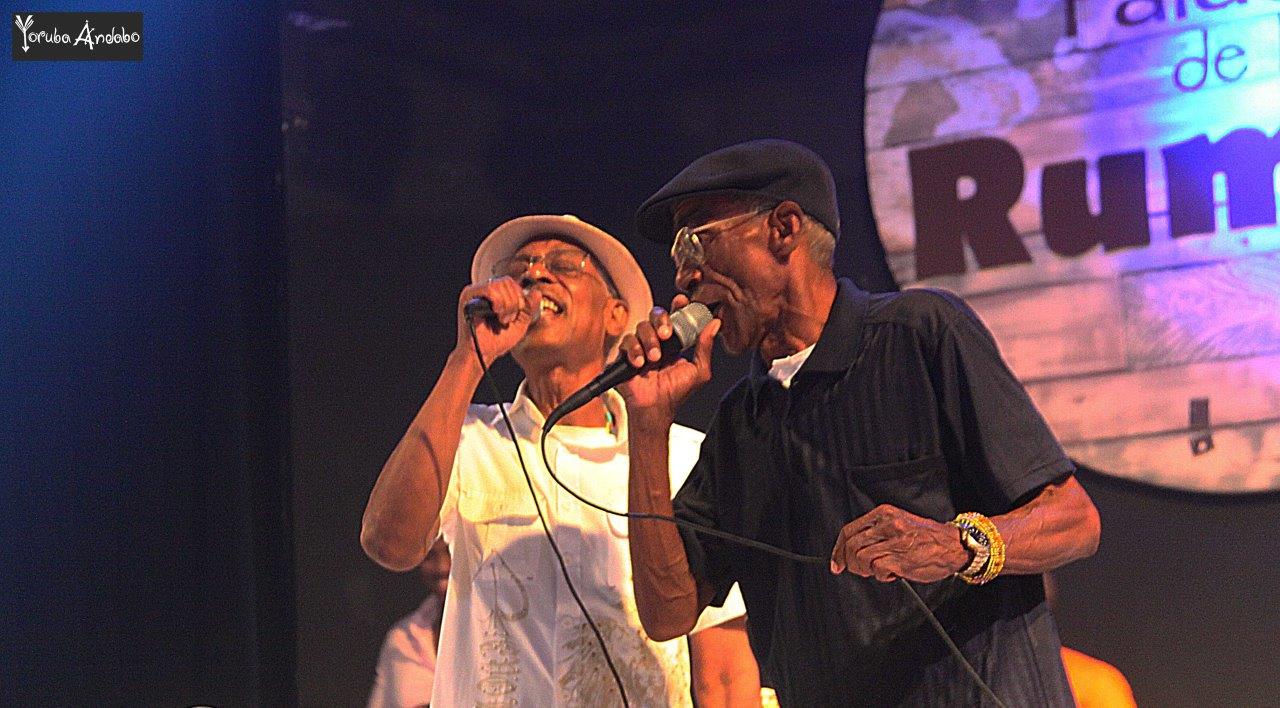
Yoruba Andabo will perform Tribute to Rumba in the Festival of Music and Poetry of Nicolás Guillén — Yoruba Andabo | PRLog
Yoruba Andabo will perform Tribute to Rumba in the Festival of Music and Poetry of Nicolás Guillén. Yoruba Andabo actuará en el espectáculo Homenaje a la Rumba en la clausura del Coloquio y Festival de Música y Poesía de Nicolás Guillén, y bajo la dirección artística del maestro José Luis Cortes se realizará el 24 de marzo en Teatro Mella – PR12541006
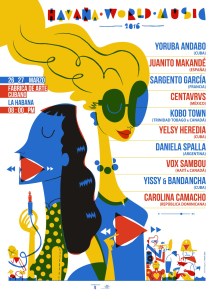
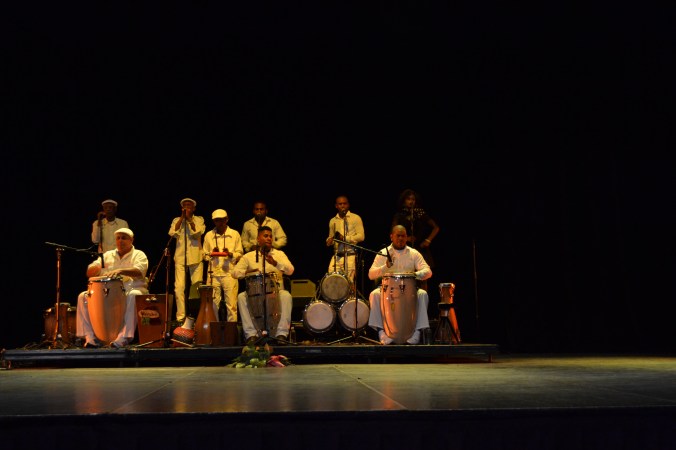
MONTREAL, Quebec – March 11, 2016 – PRLog — Yoruba Andabo will participate in the Colloquium and Festival of Music and Poetry Nicolás Guillén, an event that will have as a general theme Africa and its diaspora, and will be dedicated to the 130th anniversary of the abolition of slavery in the context of the decade of African descent. The show, entitled “Tribute to the Rumba” and under the artistic direction of Maestro Jose Luis Cortes, will be held on March 24 at 8 pm in Havana’s Mella Theater.
A reminder and update on Yoruba Andabo’s upcoming concerts:
1. At the Teatro Mella on the 16th of March, 2016 / YORUBA ANDABO >Afro Cuban Traditions / concert of 90 min
2. At the Teatro Mella on the 24th of March, 2016 / Colloquium poetry and music of Nicolas Guillen (important international event, several groups are involved)
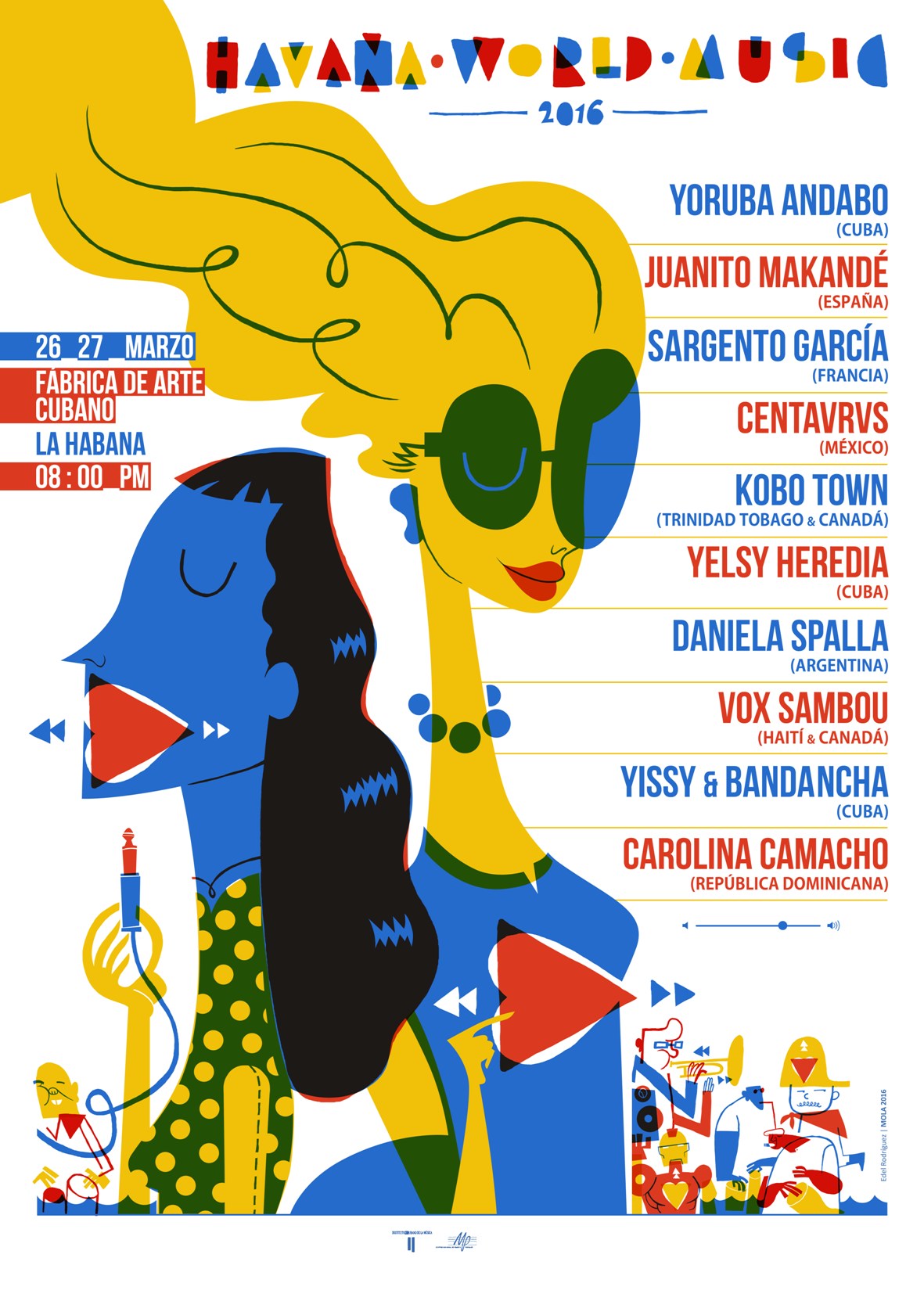
3. At Fabrica de Arte on the 27th of March, 2016/ closing performance of World Festival of Havana
Yoruba Andabo participará en el Coloquio y Festival de Música y Poesía Nicolás Guillén, evento que tendrá como tema general África y su diáspora, y estará dedicado al aniversario 130 de la abolición de la esclavitud, en el contexto del decenio de los afrodescendientes. El espectáculo, titulado Homenaje a la Rumba y bajo la dirección artística del maestro José Luis Cortes, se realizará el 24 de marzo a las 8 pm en el habanero Teatro Mella.
Un recordatorio y actualización de Yoruba Andabo próximos conciertos:
1. Teatro Mella 16 de marzo, 2016 / YORUBA ANDABO> Tradiciones Afrocubanas/ concierto de 90 minutos
2. Teatro Mella 24 de marzo, 2016 / Coloquio Poesia y Musica en Nicolás Guillen (importante evento internacional, participan varios grupos)
3. Fabrica de Arte 27 de marzo, 2016 /Clasura del Havana World Festival
Visítenos y seguir nuestras diferentes cuentas de redes sociales y la página web.
Visit us and follow our different social networking accounts and website.
http://www.havanaworldfestival.com
Yoruba Andabo en – Cuba Music – iTunes – Amazon:
http://www.cubamusic.com/Store/Album/07000306/yoruba-anda…
https://itunes.apple.com/us/album/el-espiritu-de-la-rumba/id967666081
Google+ Yoruba Andabo Official Page
https://plus.google.com/u/0/b/108740448345920191387/?pageId=108740448345920191387
Facebook.com/Yoruba-Andabo
Twitter.com/YorubaAndabo1
@yorubaandabo1
Instagram.com/YorubaAndaboOfficialPage
https://yorubaandabo.wordpress.com/
YouTube Channel; Yoruba Andabo Official Page
https://www.youtube.com/channel/UCY4M9G5JctIoH7GYMbNWQkA
Media Contact
Yoruba Andabo
Jose Lobato
jlobatomanager@gmail.com
End
Meet a Babalawo
Source: Meet a Babalawo
We don’t remember medicine until we are ill. It’s the same with our Yoruba medicine , many don’t remember traditional medicine until Western medicine fails them. To be fair, there are just as many or maybe even more for whom native medicine is the first port of call for the simple reason that they cannot afford the cost of Western medical care . But where there are means, the leaning is more towards Western medicine, until of course a problem is encountered that defies orthodox science.
Reasons why people use/don’t use traditional medicine vary, experiences vary. So many have only praises and some have regrets on using Yoruba herbal science. Why the variations? There’s no published directory of herbal practitioners, or widely acknowledged certification , so that there is no way of ascertaining the qualifications of a practitioner before you decide to place yourself in their care. In the days gone by, presumably word of mouth recommendation was all the certification required, and that’s at the root of the problem experienced by people who would use Yoruba herbal practitioners today. Just how many people who do use traditional medicine will own up to the fact? How do you get a recommendation when visits to Babalawo are seen by the educateratti as hush-hush.