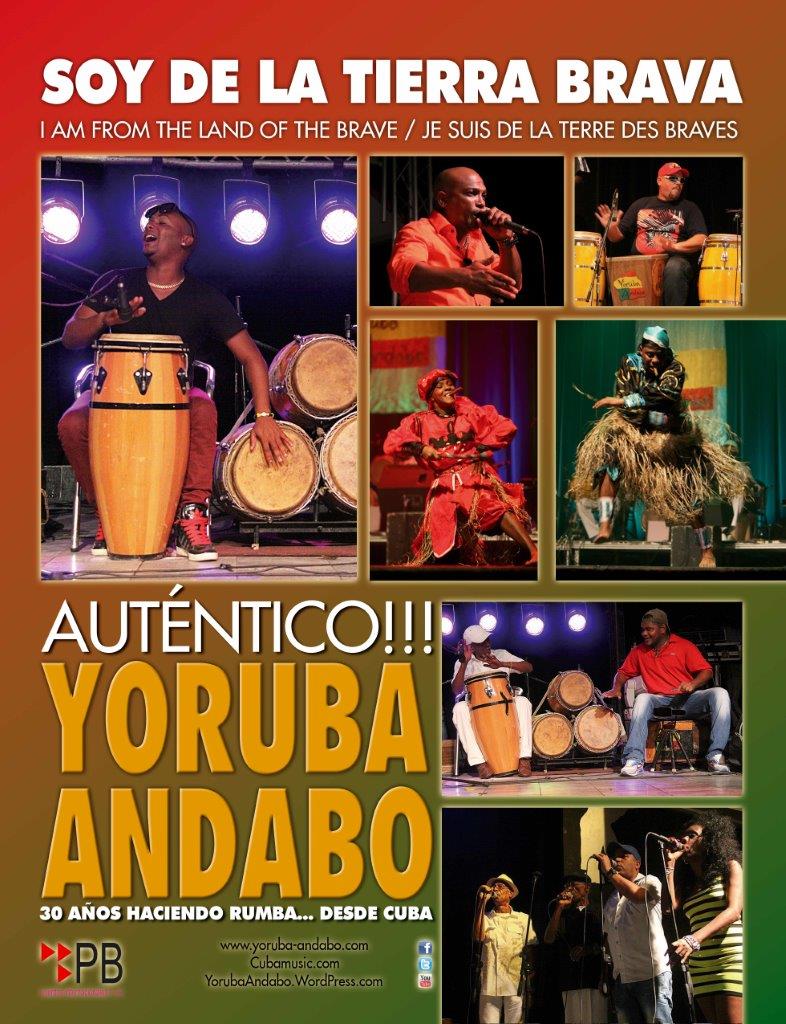
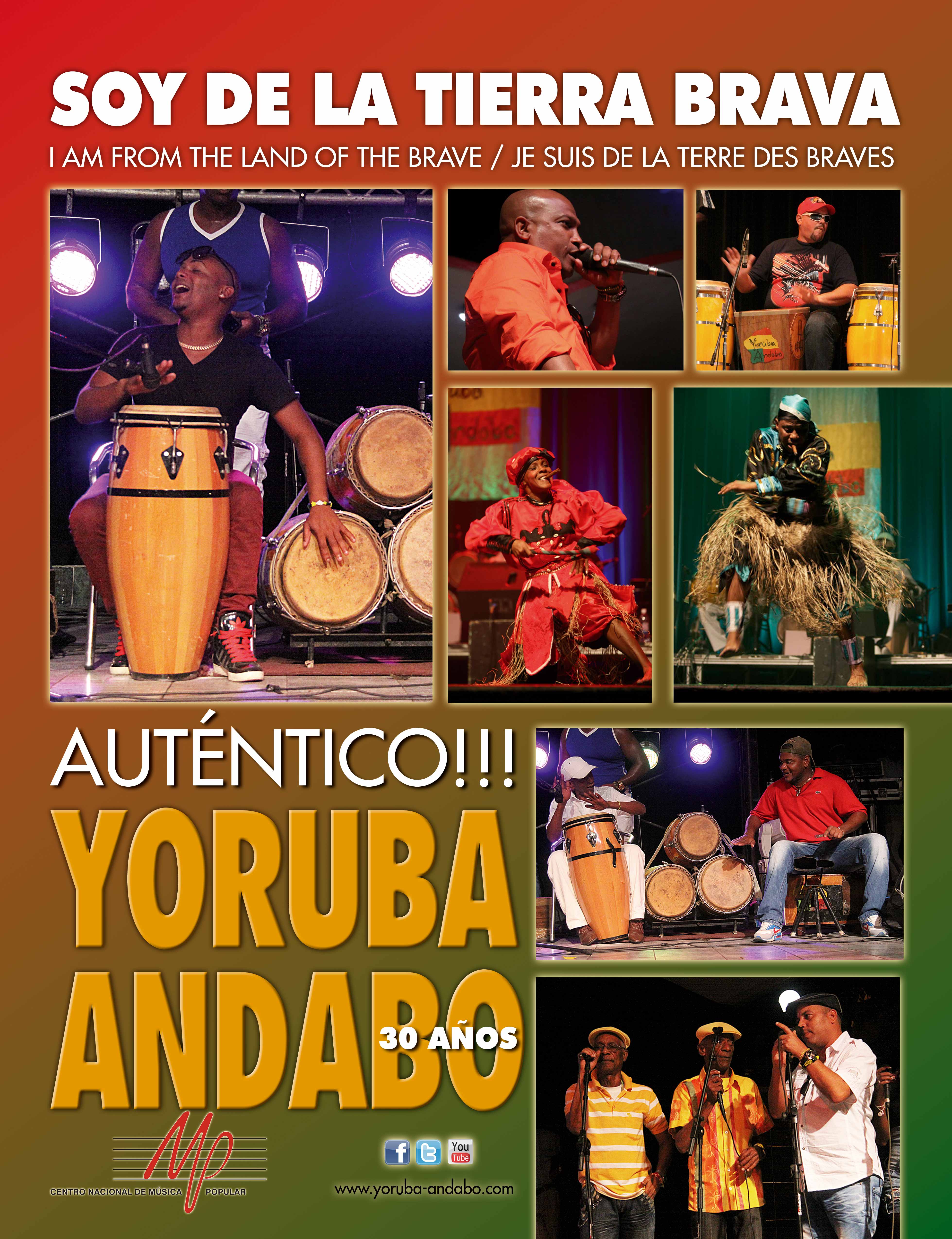
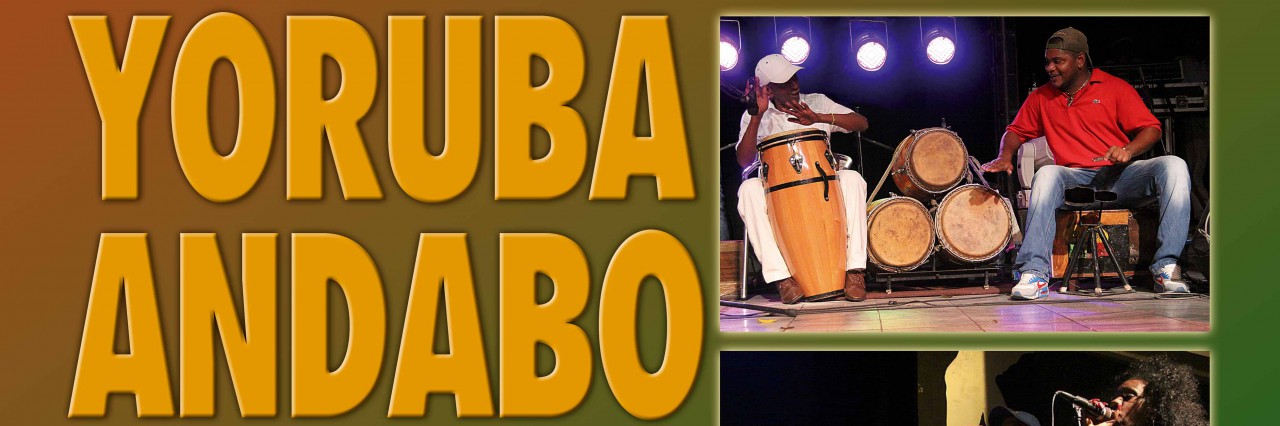
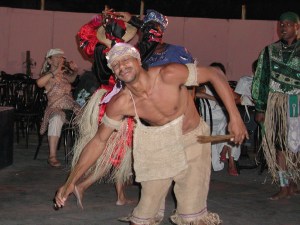
Yoruba Andabo is a Cuban band performing original sacred African music Yoruba Andabo es una banda cubana interpretando música africana sagrada originales.
A Young Iyalorisa Tells Us The Role Of Dance And Song In Yoruba Spirituality
Yoruba Religion – May 5, 20160
My name is Egbelade Omitonade Ifawemimo. I practice African Traditional Religion, Yemoja worshipper. I am Yemoja priestess which also versed in Ifa, Researcher, Theologian. I am a graduate of Obafemi Awolowo University where I studied Economics Education, Ile Ife, Osun State. I am from Ibadan, Oyo State, Nigeria.
In Yoruba culture, songs and dance have so much importance to religious worship and spirituality. All Orisas holds particular importance in dance and songs. And Worship in African Traditional Religion take the form of rites and ceremonies and include prostrating, praying, invoking, and making offerings. Sounding the bell or gong, singing, drumming, and dancing as occasion demands. Song and dance come up under liturgy. Liturgy therefore, is an important element of worship in African Traditional Religion.
Video Player
In Orisa Worship, the presence of dance as a way of reenacting spirituality and songs as a way of reverence to the power of Olodumare and Orisas are essential to the worship of Orisas. Each Orisa is identified with drum ensemble, songs and dance styles. Also, every Orisa has unique dance movement that reflects its attributes as we have different drums for each Orisa. That is, the musical instruments used for each Orisa is different. The musical instrument for Sango and Yemoja is bata, Ifa is for Agogo and other Orisas is Dundun.
The traditional Yoruba week has four days dedicated to the Orisa in the following order:
Day 1 is dedicated to Obatala
Day 2 is dedicated to Orunmila
Day 3 is dedicated to Ogun
Day 4 is dedicated to Sango
However, to be streamlined with the Gregorian calendar, Yoruba people also have a 7 day week which is for trade and business matters
The seven Yoruba business days of the week are:
Ojo-Aiku (Sunday),
Ojo-Aje (Monday),
Ojo-Ishegun (Tuesday),
Ojo-Riru (Wednesday),
Ojo-Bo (Thursday),
Ojo-Eti (Friday)
Ojo-Abameta (Saturday).
Yoruba Beliefs About Monday
Ojo Aje (Monday): This is the day on which money joined Orisa on earth and is known as the day of money. Yoruba people use this day to start business, and to discuss economic and financial programs.
We don’t remember medicine until we are ill. It’s the same with our Yoruba medicine , many don’t remember traditional medicine until Western medicine fails them. To be fair, there are just as many or maybe even more for whom native medicine is the first port of call for the simple reason that they cannot afford the cost of Western medical care . But where there are means, the leaning is more towards Western medicine, until of course a problem is encountered that defies orthodox science.
Reasons why people use/don’t use traditional medicine vary, experiences vary. So many have only praises and some have regrets on using Yoruba herbal science. Why the variations? There’s no published directory of herbal practitioners, or widely acknowledged certification , so that there is no way of ascertaining the qualifications of a practitioner before you decide to place yourself in their care. In the days gone by, presumably word of mouth recommendation was all the certification required, and that’s at the root of the problem experienced by people who would use Yoruba herbal practitioners today. Just how many people who do use traditional medicine will own up to the fact? How do you get a recommendation when visits to Babalawo are seen by the educateratti as hush-hush.
The iconic funk rhythm band Earth, Wind & Fire will perform for the first time in Cuba during the third edition of the Havana World Music festival, organizers of the March 2016 event confirmed on Wednesday to EFE.
The U.S. band is scheduled to perform numbers from its most recent album “EW & Experience,” although additional details of their show remain to be specified.
Earth, Wind & Fire will head the list of bands at the third Havana World Music festival, which will also include the Mexican band Centavrvs, nominated for a Latin Grammy; Ellas, a trio of mariachis from Los Angeles; Spaniards Jorge Pardo and Lin Cortes, and Carolina Camacho from the Dominican Republic.
So far, the host country’s performers will include salsa band Havana D’ Primera, singer-songwriter Kelvis Ochoa, the Yoruba Andabo folk group and jazz newcomers Yissy & Bandancha, among others.
Havana World Music was launched in 2014 by Eme Alfonso as a result of his experience in a project to investigate the island’s ethnic-cultural origins.
According to the artist, the aim of the festival is to suggest to the young Cuban public “new sounds coming from different cultural areas,” which make the event a forum for disseminating alternative musical styles outside normal commercial routes.
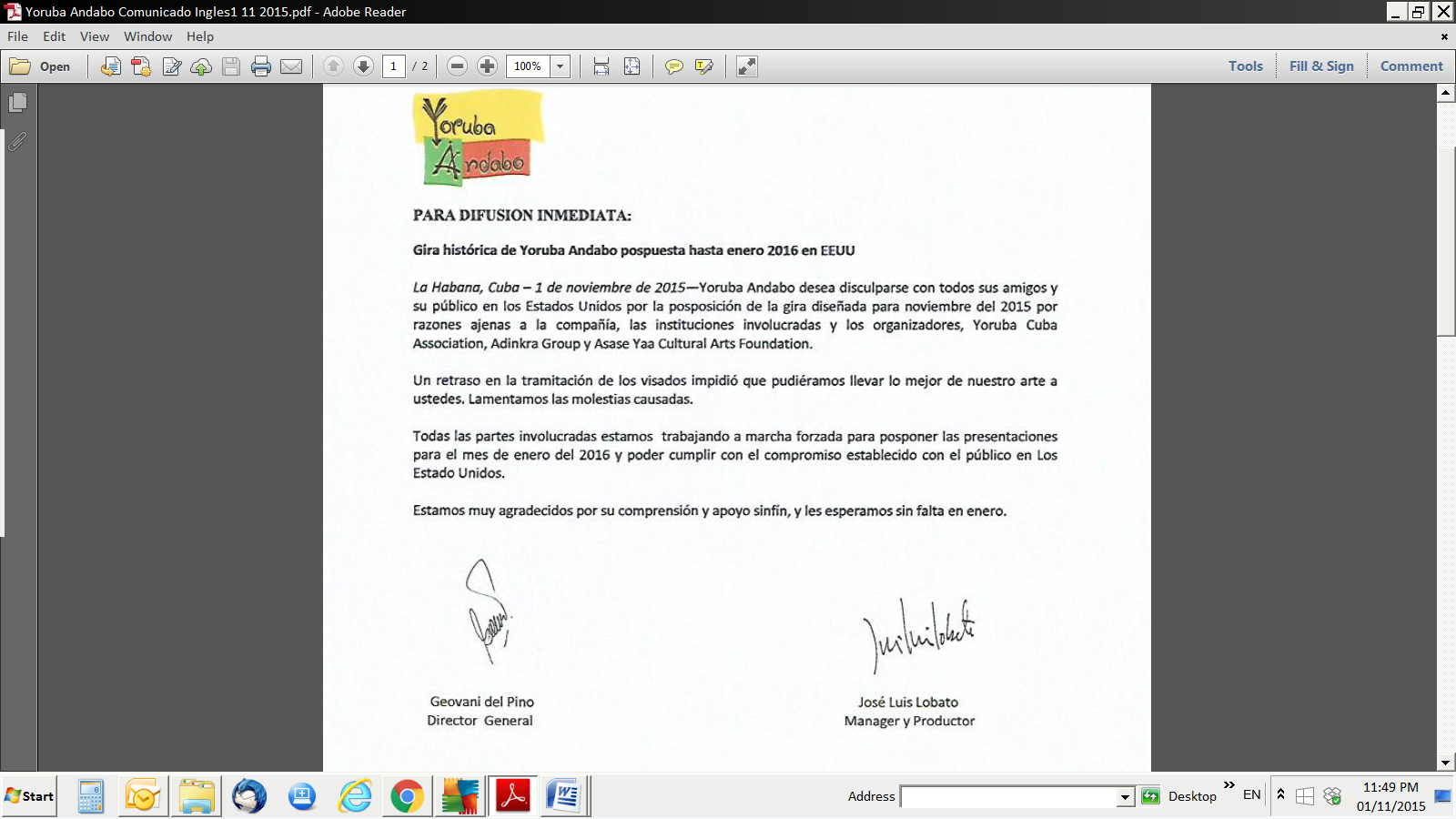
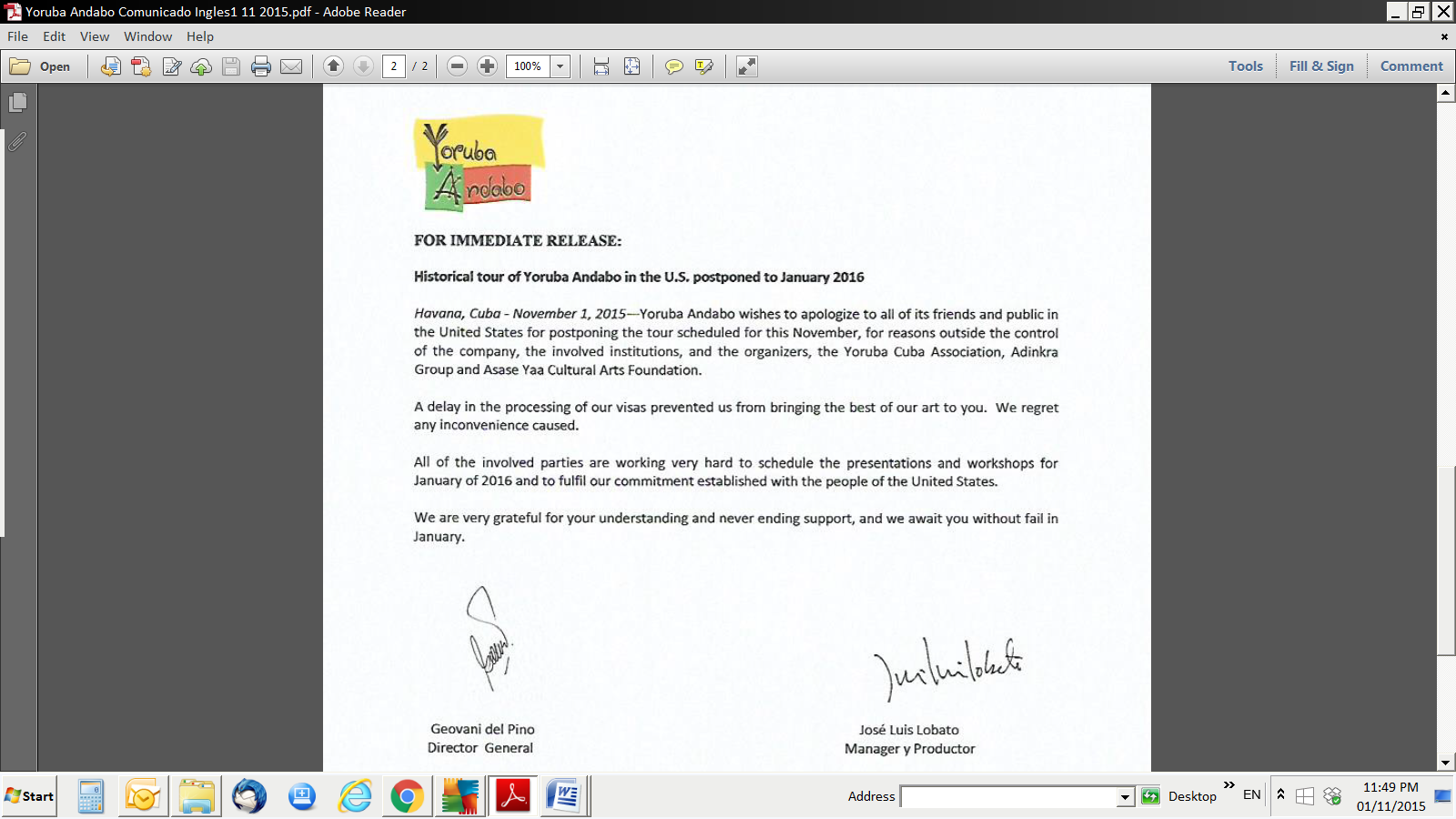
Yoruba Andabo wishes to apologize to all its friends and public in the United States for postponing the tour scheduled for this November, for reasons beyond the control of the company, the involved institutions, and the organizers and promoters; The Yoruba Cuba Association, The Adinkra Group, and The Asase Yaa Cultural Arts Foundation.
A delay in the processing of our visas prevented us from bringing the best of our art to you. We regret any inconvenience caused.
All of the involved parties are working very hard to schedule the presentations and workshops for January 2016 and to fulfill our commitment established with the people of the United States.
We are very grateful for your understanding and never ending support, and we await you without fail in January.
Respectfully yours
Geovanni Del Pino – General Director
Jose Luis Lobato – Manager and Producer
Yoruba Andabo desea pedir disculpas a todos sus amigos y público en los Estados Unidos para posponer la gira prevista para este mes de noviembre, por razones ajenas a la voluntad de la empresa, las instituciones involucradas, y los organizadores y promotores; La Asociación Yoruba Cuba, El Grupo Adinkra y La Fundación Cultural Arts Asase Yaa.
Un retraso en la tramitación de los visados nos impidió traer lo mejor de nuestro arte para usted. Lamentamos cualquier inconveniente causado.
Todas las partes involucradas están trabajando muy duro para programar las presentaciones y talleres para enero de 2016 y para cumplir con nuestro compromiso establecido con el pueblo de los Estados Unidos.
Estamos muy agradecidos por su comprensión y apoyo sin fin, y les esperamos sin falta en enero.
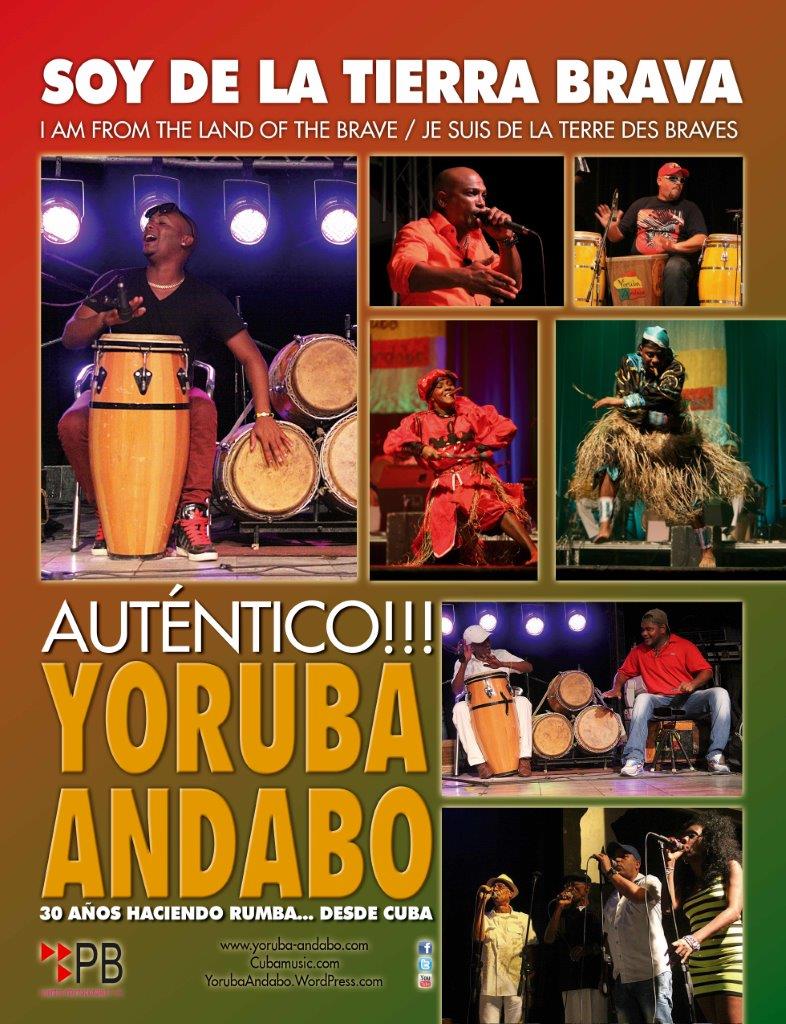
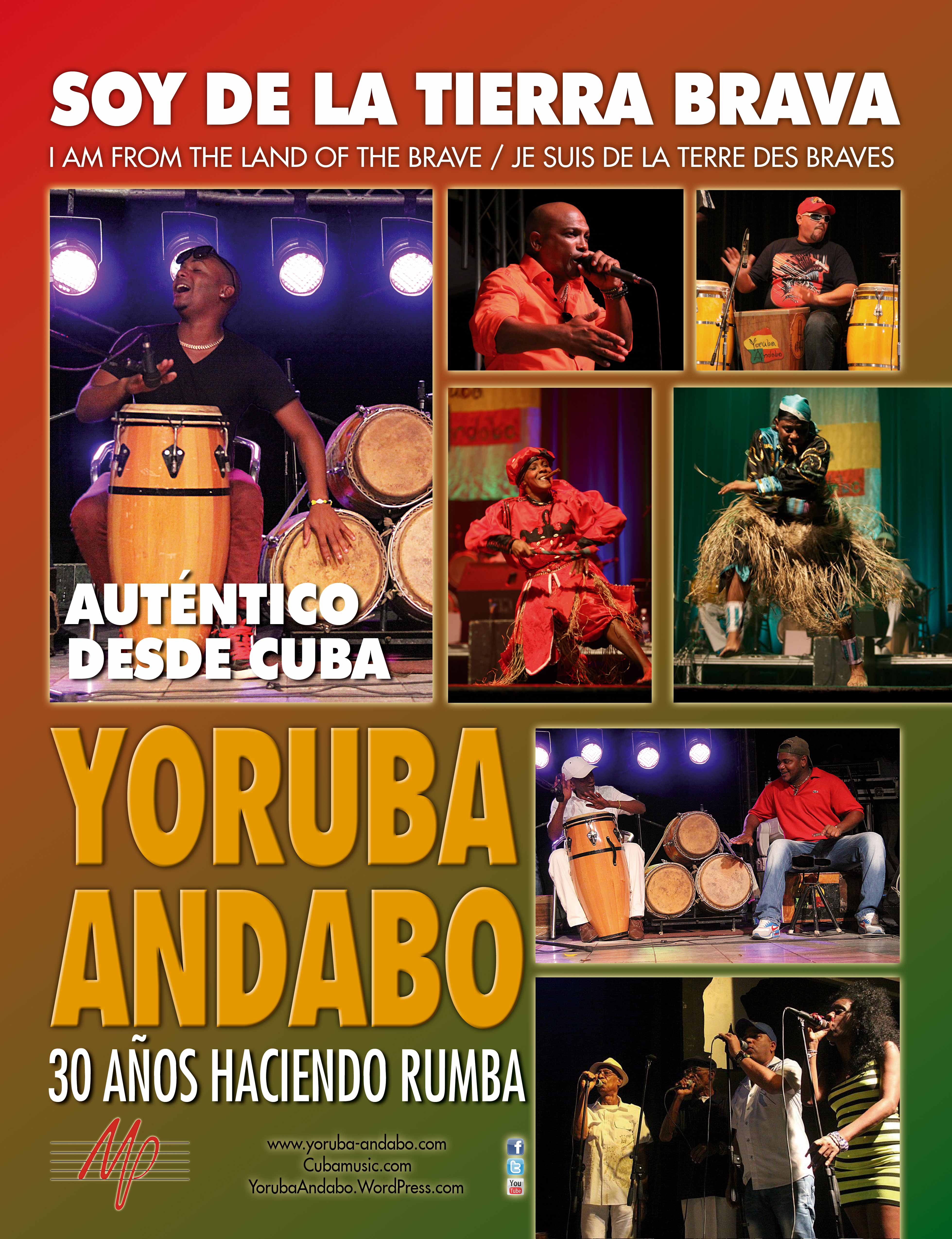
Yoruba Andabo se presentará el domingo 18 de octubre en el célebre teatro Teresa Carreño, en la ciudad de Caracas, Venezuela. Estrenará temás musicales de su nuevo album titulado Soy de la Tierra Brava.
Yoruba Andabo interpretará La Gozadera, tema musical del filme Havana Instant, en el cierre del concierto que brindara el domingo 18 de octubre en el célebre teatro Teresa Carreño, en la ciudad de Caracas, Venezuela.
nota: Zair/TELESUR grabará el lunes 12 octubre, un programa From Havana sobre Yoruba Andabo y cubrirá el concierto del domingo… Puede haber link con TeleSur!!
Yoruba Andabo will present a concert on Sunday, October 18th, at the famous Teresa Carreño theater in Caracas, Venezuela. We will be be performing the released tracks from our new album entitled” I am from the Land of the Brave.”
The Yoruba Anadabo group will also play the ” Gozadera”theme song of the film Havana Instant, at the close of the concert that is being offered on Sunday, October 18th at the famous Teresa Carreño theater in Caracas, Venezuela.
Note: Zair / Telesur will play on Monday, 12 October, on the program “From Havana” and it will cover the Yoruba Andabo concert of this Sunday …you may watch by linking with Telesur !!
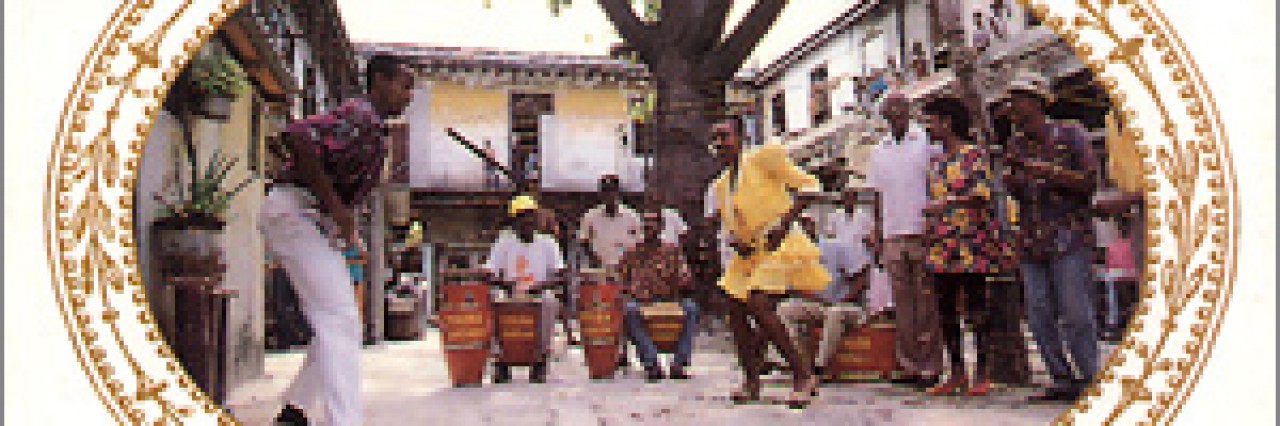
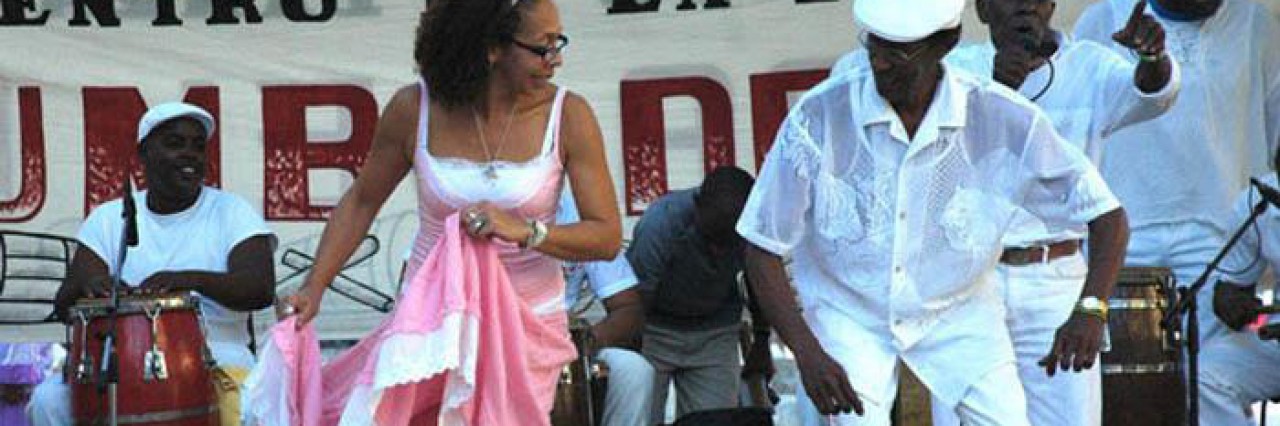
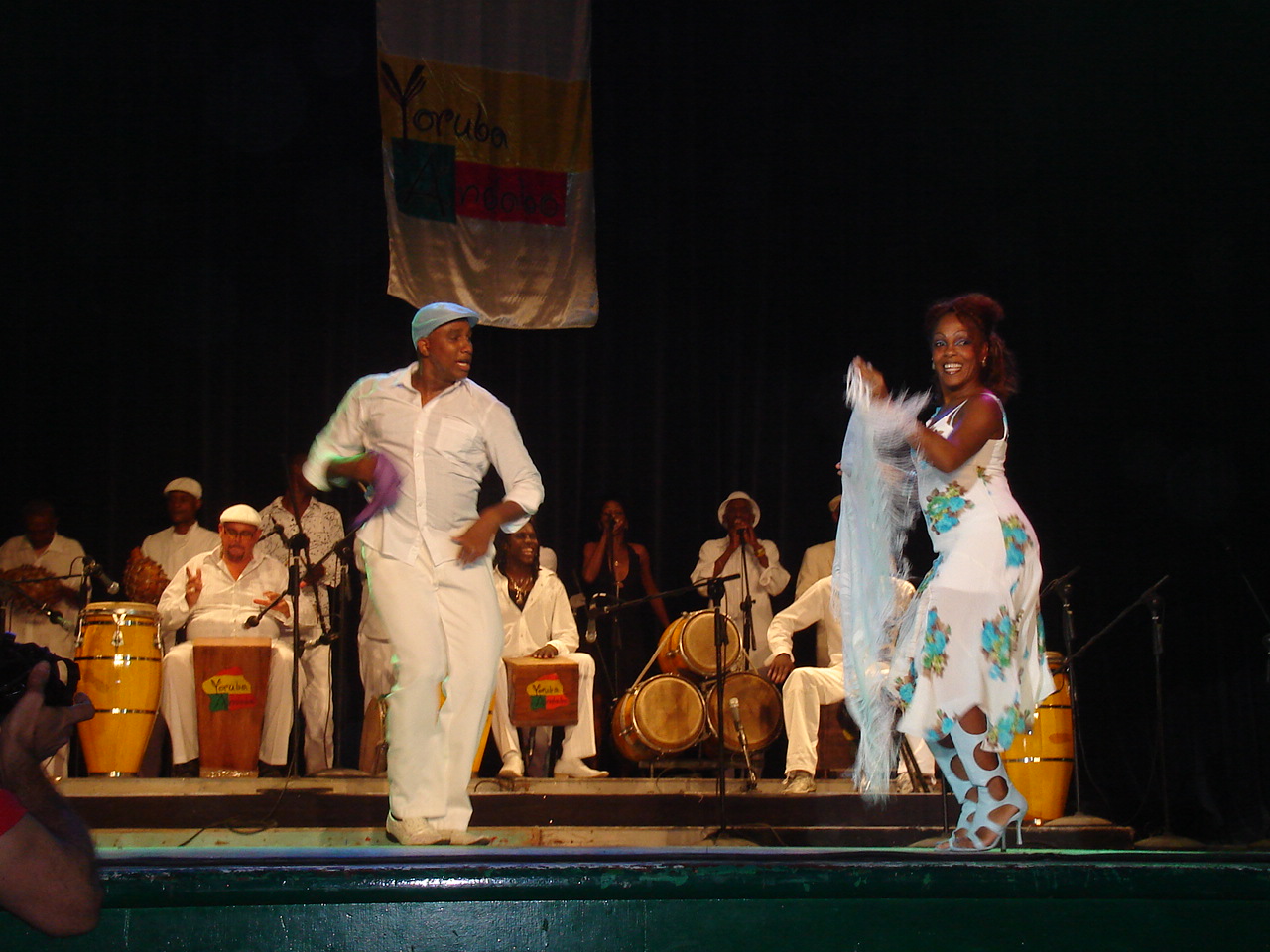
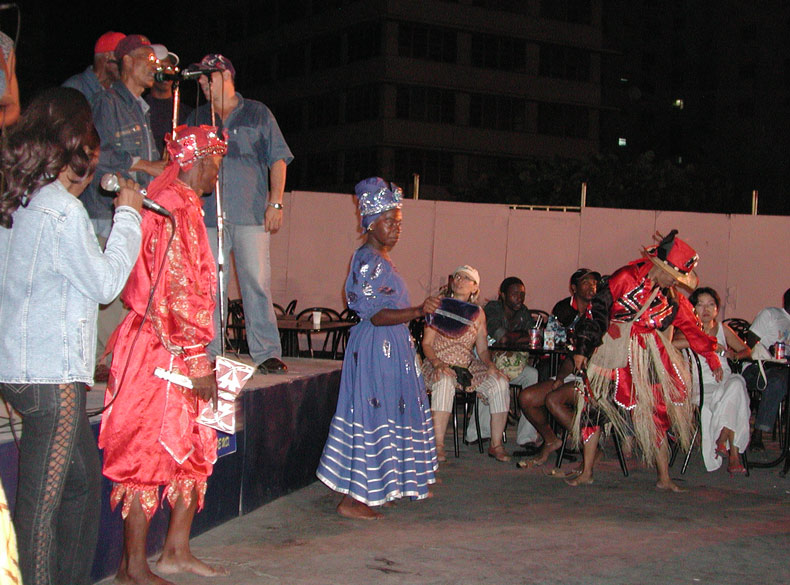
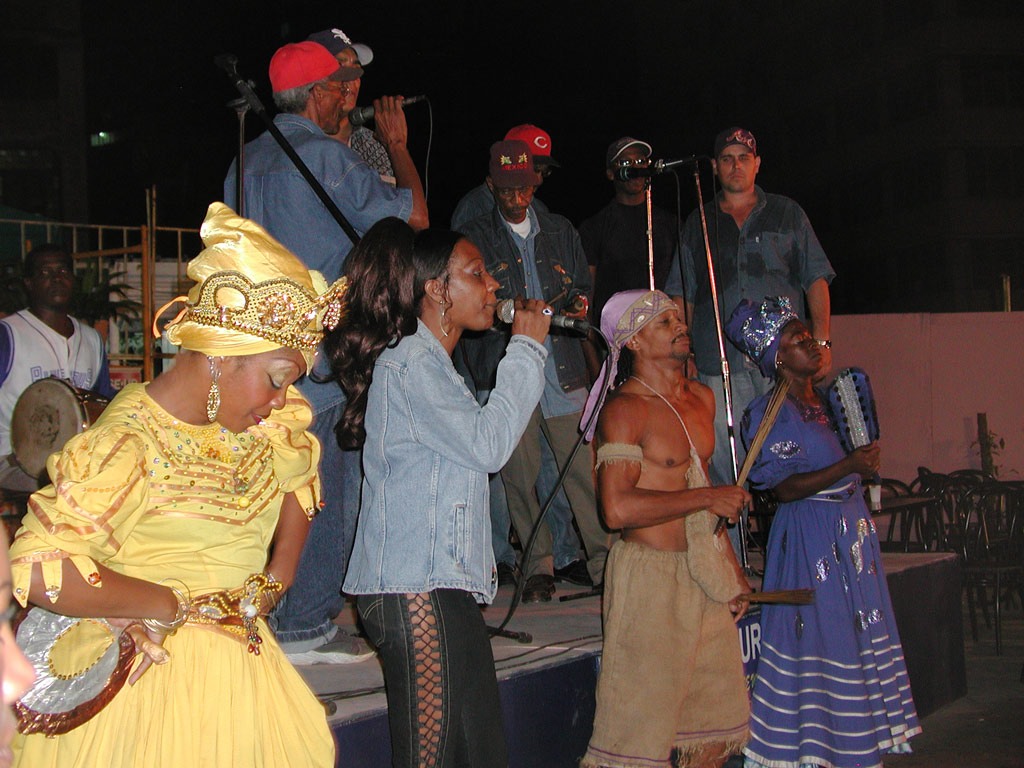
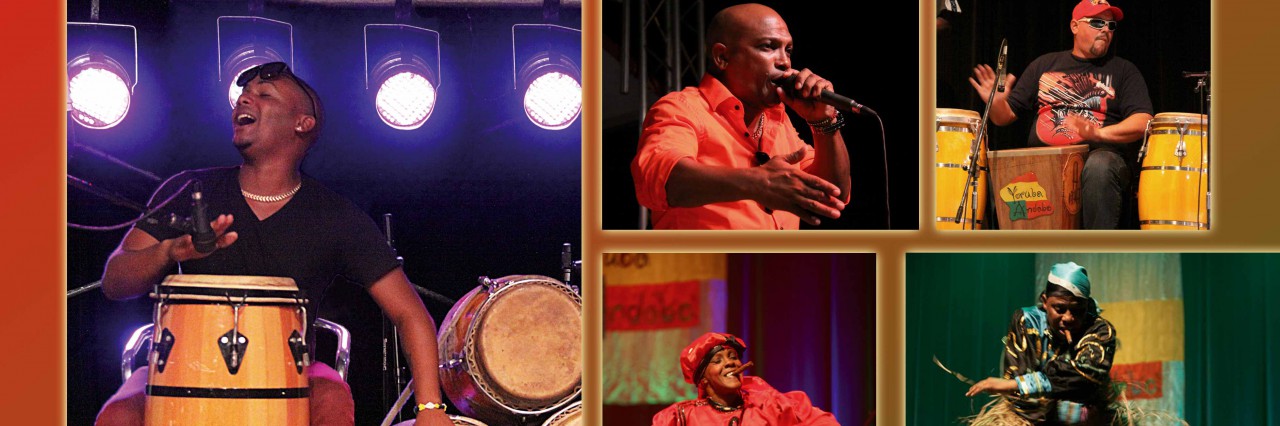
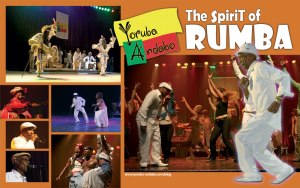
When members of Yoruba Andabo perform the rumba gua guanc, you can expect feathers to fly. The ritualistic Afro-Cuban dance represents the courtship of a rooster and a hen. To intricate drum rhythms and call-and-response chants, the male performer attempts to catch his partner off guard touching her crotch with the flick of a handkerchief or thrusting his limbs and pelvis at her provocatively while the female symbolically protects herself with hand or skirt.
“The guaguanc is the most popular form of rumba, which was created in the ports of Matanzas and Havana, where most of us come from,” says Matías Geovani del Pino Rodríguez, singer, director, and cofounder of the 15-piece Yoruba Andabo ensemble. “It has always been an important part of what we do. The company started out in 1961 as Guaguanc Marítimo Portuario a group of dockworkers who got together to perform at a labour festival.
“But our interest was not only in rumba,” continues Rodríguez. “We wanted to celebrate all aspects of our Afro-Cuban heritage, which is rich and complex. When the slaves were shipped across the Atlantic, all they took with them was their music, their dance, and their religious beliefs. They maintained these traditions through centuries of repression by concealing their activities, often in ingenious ways. Since the [1959 Cuban] revolution, Afro-Cuban culture has come out in the open, and is now experiencing a major revival.”
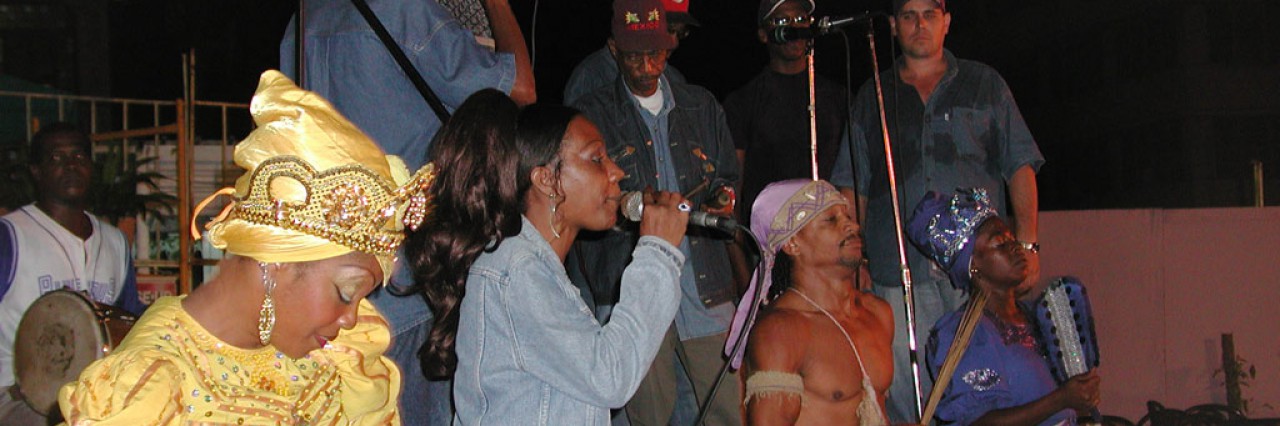
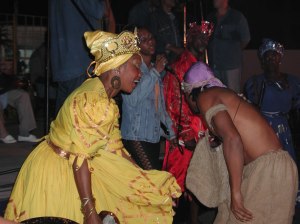
At the heart of the mesmerizing spectacle that Yoruba Andabo presents is the dance and music of Santería, a religion rooted in West Africa, and among the Yoruba people of Nigeria in particular. Its initiates venerate orishas (or santos), spirits similar to the gods and goddesses of ancient Greece. In Cuba, the slaves fused these orishas with Catholic saints, in whose name and image they could be worshipped. Sometimes genders were crossed: Chang & the orisha of manhood, fire, thunder, and lightning was equated with St. Barbara, probably because, like hers, his emblematic colours are red and white.
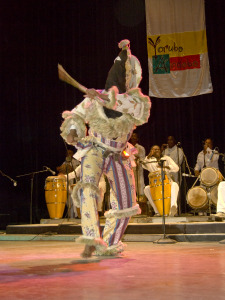
“All of the orishas have their own colour, dress, and symbols as well as their own ritual dance, chant, and toqué [rhythm],” Rodríguez explains. “We present the most important deities: Elegguá, Oggún, Ochún, Yemayá, Babalú, Chang, and Obbatalá. The dancers perform solo, and express the particular qualities of each orisha. Their movements are based on tradition, though these are not precisely choreographed the dancer follows the rhythms played by the drummers, who in turn follow the chant of the leader and chorus.”
The company Yoruba Andabo has a long-standing link with the arts scene in Canada. In 1993, it earned a Juno for contributing to jazz saxophonist Jane Bunnett’s Spirits of Havana.
“We are travelling all over the world, and keeping our Afro-Cuban arts and culture alive,” says Rodríguez. “This is why we are called Yoruba Andabo, because in the Carabalí language [of Nigeria], andabo means ‘a friend or admirer,’ and we are all friends and loyal followers of the Yoruban religion. It sustains us, just as it sustained our ancestors.”





 Yoruba Andabo