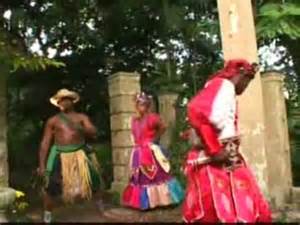
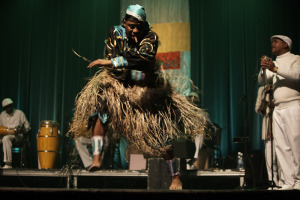
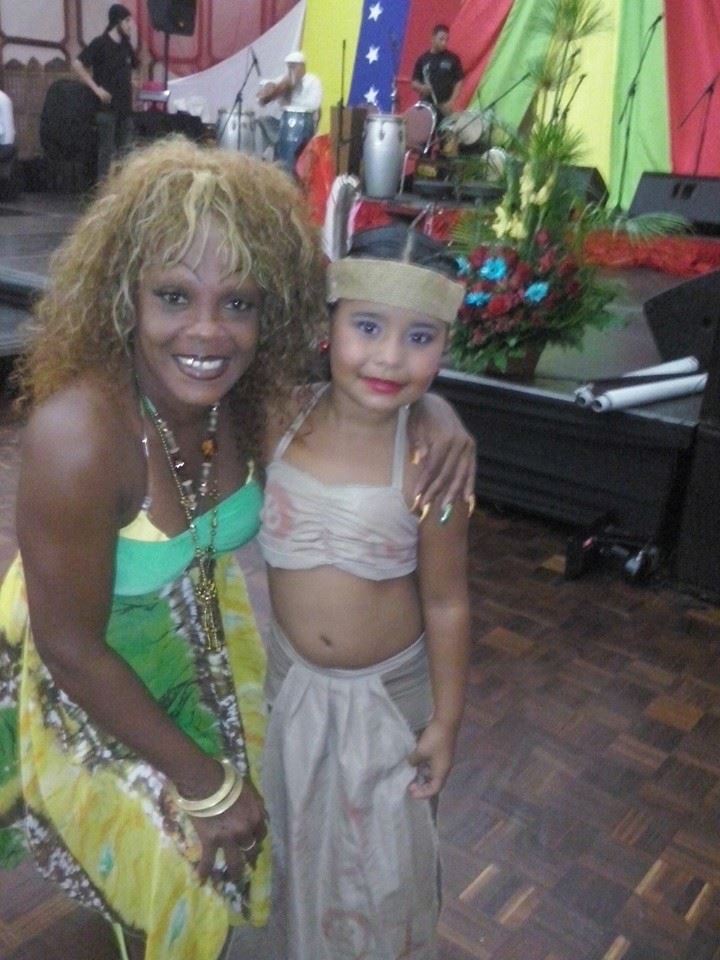
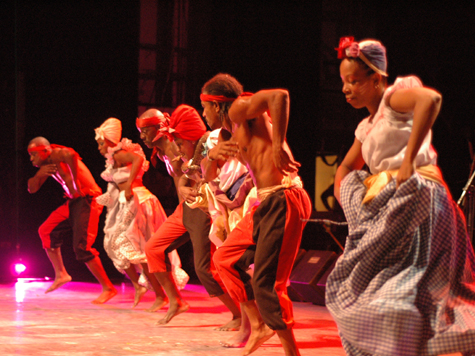
In Cuba, music is part of every-day life and an important feature of its past. Callejon de Hamel (Hamel Alley) features grande-sized murals on its homes and structures and tiny shops selling Cuban Santeria art. Starting around noon Sundays, practitioners of the Santeria faith dance to rumba rhythms.
Cuban
Ejercicios con soluciones – Tema 1 (2ª parte) (Learning Yoruba Language)
Rumba; the ultimate expression of the Afro-Cuban way of life (Courtesy of and by Baila Society)
In Cuba, Rumba is a generic term covering a variety of musical rhythms and associated dances. The rumba has its influences in the music brought to Cuba by Spanish colonizers as well as Africans brought to Cuba as slaves. Rumba is more than a music and dance genre; it is the collective expression of the Creole nature of the island itself. Rumba is a secular genre of Congolese African and Spanish flamenco influences, and is one of the primary ancestors of popular music in Cuba.
![]() |
| Map of Cuba |
Rumba developed in the Cuban provinces of Havana and Matanzas (one hour east of Havana) in the late 19th century, as a blending of Congolese-derived drumming styles and Spanish flamenco-singing influences. As a sexually charged Afro-Cuban dance, Rumba was often suppressed and restricted because it was viewed as dangerous and lewd.
Afro-Cuban rumba is entirely different than ballroom rumba, or the African style of pop music called rumba. Rumba developed in rural Cuba, and is still danced in Havana, Mantanzas and other Cuban cities as well as rural areas, especially those with a significant or predominant black community, although now it is infused with influences from jazz and hip hop.
A Cuban Rumba song often begins with the soloist singing meaningless syllables, which is called ‘diana(s)’. He then may proceed to improvise lyrics stating the reason for holding the present Rumba (‘decimar’; span.: to make ten-line stanzas), or instead tunes into a more or less fixed song such as: “Ave Maria Morena” (Yambú, Anónimo), “Llora Como Lloré” (Guaguancó, S. Ramirez), “Cuba Linda, Cuba Hermosa” (Guaguancó, R.Deza), “China de Oro (Laye Laye)” (Columbia), “Malanga (Murió)” (Columbia)”.
There are three main styles of Cuban rumba: the yambú (the oldest style dating back to the colonial period), the guaguancó (the most popular of the three) and the columbia (the most African-flavored, and also the fastest).

Rumba Performance
Yambú is the oldest and slowest known style of rumba, sometimes called the Old People’s Rumba. As the oldest style, yambú was first played on wooden box drums called cajones (as African-derived drums were feared and often banned), the Cuban claves (simple wooden sticks that are probably one of the most important instruments in the island’s history) and a metal shaker called the maruga. In addition, cucharas (spoons) were sometimes added, playing a counter rhythm to the claves. This counter rhythm would eventually be played by palitos (sticks) on a guagua (horizontal piece of bamboo on a stand).
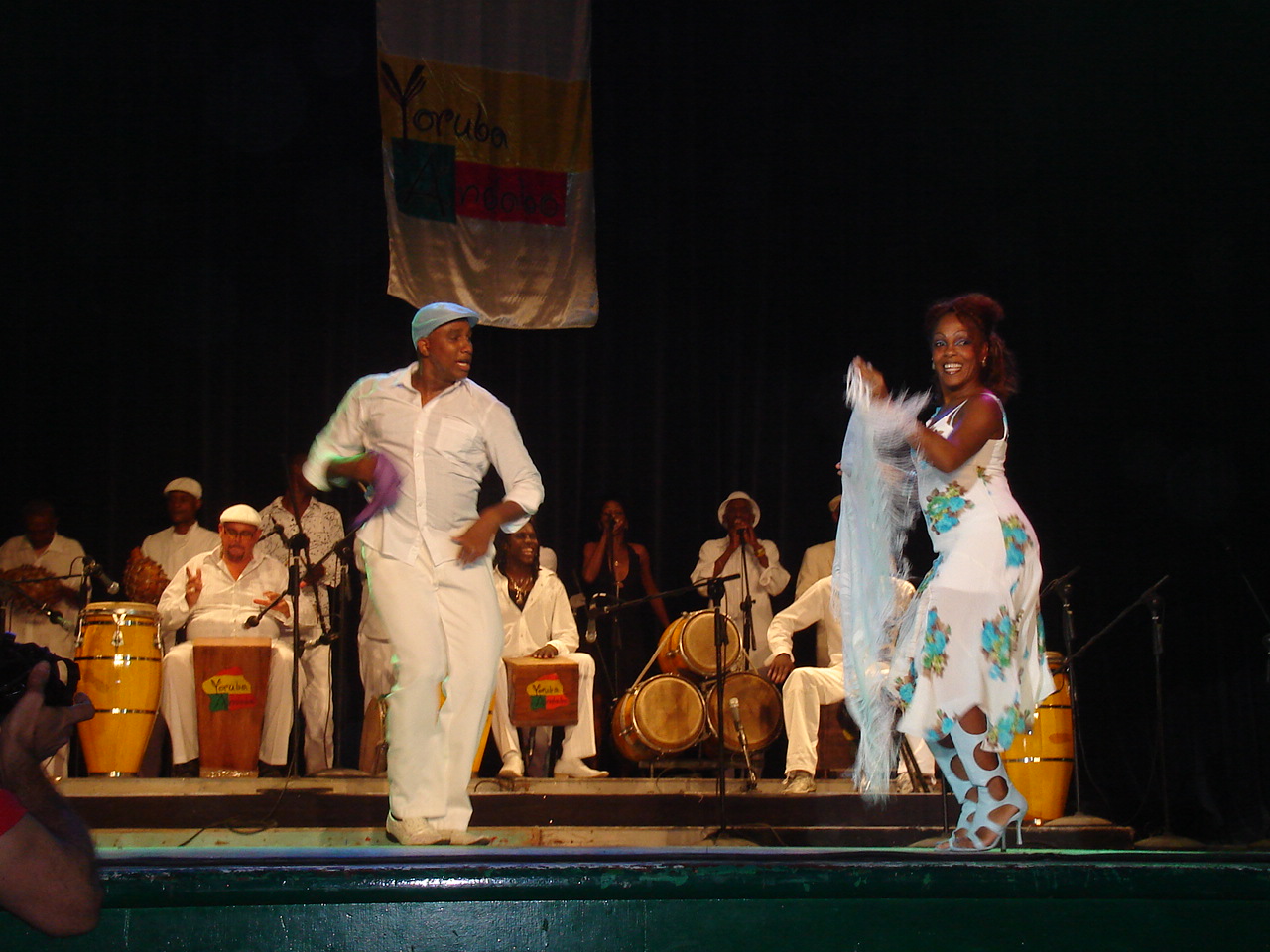
It uses the slowest beat of the three Rumba styles and incorporates movements feigning frailty. It can be danced alone (especially by women) or by men and women together. Although male dancers may flirt with female dancers during the dance, they do not use the vacunao of Rumba Guaguancó. The yambú dance is slow and graceful, danced by male-female couples who combine Spanish and African movements in a courtship-style partnership.
Rumba Guaguancó is faster than yambú, with more complex rhythms, and involves overtly flirtatious movements between a man and a woman in the roles of “Rooster” and “Hen”. The guaguancó style emerged later as a faster tempo form, and was (and still is) played on tumbadoras (conga drums), along with the claves, the palitos and the maruga. The conga drums are modeled after the Congolese yuka drums, direct descendents of the African ngomas, and would go on to be the most commonly used hand drums in all of Latin music. There are three main sizes (or widths) of tumbadoras: the tumba (bass), the segundo or tresdos (middle) and the quinto (highest, which is the lead drum), and each drum is tuned to a distinct pitch. (At first, tuning took place with heat as the skins were nailed on, but later, metal tuning hardware developed.)
The woman both entices and “protects herself” from the man, who tries to catch the woman off-guard with a vacunao — tagging her with the flip of a handkerchief or by throwing his arm, leg or pelvis in her direction in an act of symbolic sexual contact. To defend herself, she may cover with her hand, or use her skirt to protect her pelvis and whip the sexual energy away from her body. Guaguancó most likely inherited the idea of the ‘vacunao’ from yuca or macuta dances, which were both brought to Cuba by Bantú ethnic groups. This rooster-hen dynamic is a feature of many African dances found throughout the Caribbean and Latin America, and in many places was frowned-upon (or even banned).
(Note: In our CTV routine, we have a “vacunao” moment with the girl protecting herself)
Rumba Columbia (not “Colombia”) is a fast and energetic Rumba, with a 6/8 feel, which is often accompanied by a 6/8 (Spanish ‘seis por ocho’) beat struck on a hoe or a bell. It is assumed that the Columbia originated in hamlets in the interior of Cuba rather than the suburbs of the larger cities from where other types of Cuban Rumba stem.
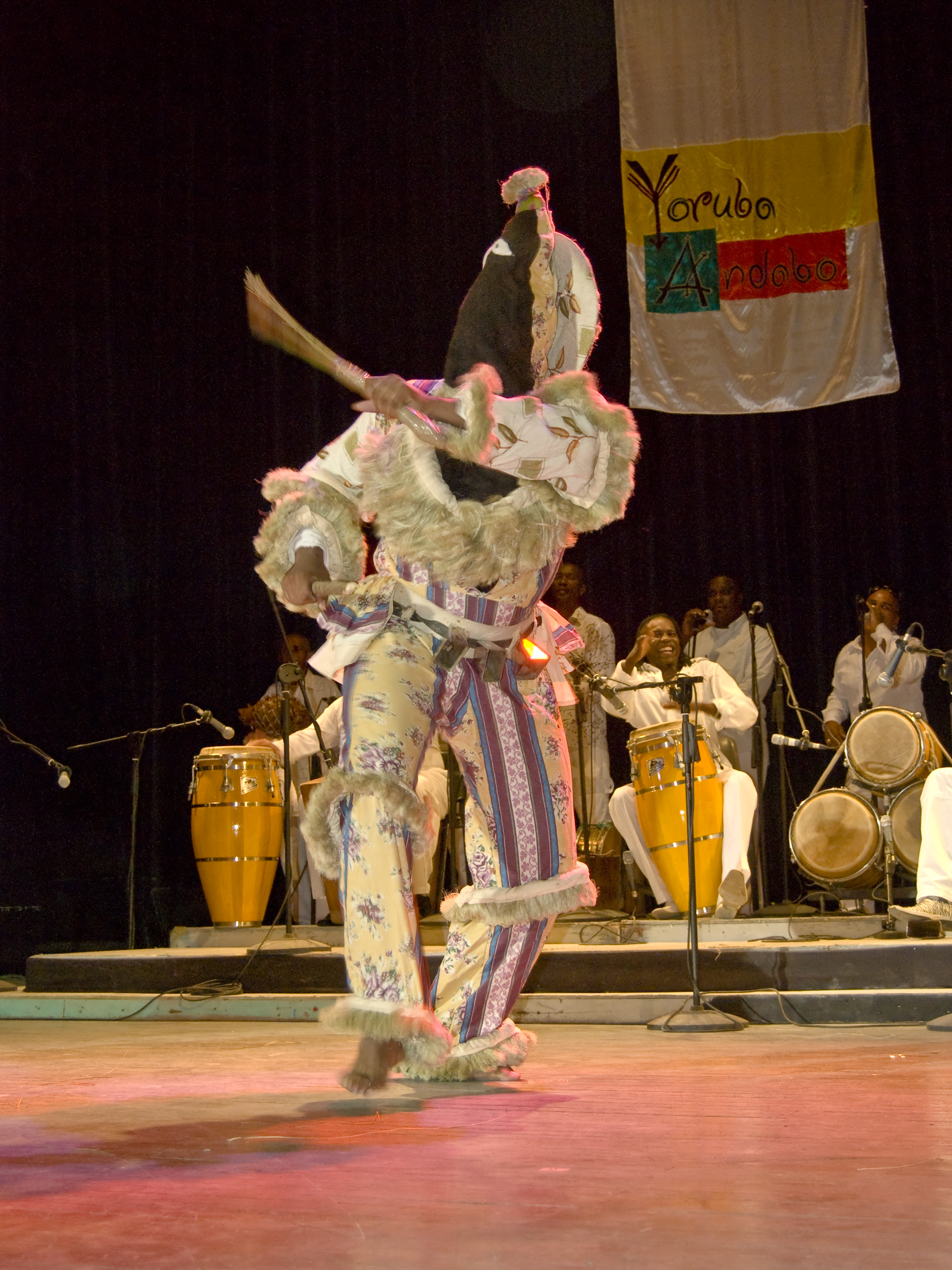
The Columbia is primarily a male-only demonstrative dance, with a more uptempo and complex rhythm that incorporates some of the Congolese ritual music aspects as well as the Bantú languages, still widely used in folkloric as well as popular music. It too is played on tumbadoras and the other noted percussion instruments, and also adds a bell that plays a complex 12/8-meter pattern on top of the 4/4-meter structure. Solo, traditionally male, dancers provoke the drummers, especially the player of the smallest drum (Quinto, here also soloist drum), to play complex rhythms that they imitate through their creative and sometimes acrobatic movements. Men may also compete with other men to display their agility, strength, confidence and even sense of humor. Columbia incorporates many movements derived from Congo dances as well as Spanish flamenco, and more recently dancers have incorporated breakdancing and hip hop moves. While only men typically dance columbia, there were (and are) famous women who stood out such as Andrea Baró, who is often the subject of columbia songs.
The structure of rumba songs has remained virtually the same since it first began. In the yambú and guaguancó styles, the claves begin the song, establishing the tempo with the distinct, five-note pattern (which is the heartbeat of most Cuban music as well as salsa). The remaining percussion instruments enter in layered fashion, and begin their repetitive patterns. The lead singer then sets the key with a series of scat-like vocalizations called the diana, followed by the verses of the song. The lead vocalist then initiates the call-and-response section and is responded to by the chorus while he/she improvises in between, and it is at this time that the dancing begins.
![]() |
| Oyelos De Nuevo Los Muñequitos de Matanzas |
Almost the same structure holds true for the columbia, the difference being that many songs begin with the cowbell (and the claves are not always included), and columbia dancers dance solo instead of in couples. Traditional rumbas began to be recorded in Cuba much later after their emergence (around the 1950s), and the seminal group Los Muñequitos de Matanzas is one of the most significant folklore ensembles to take the genre around the world. In the past several decades there have been variations to the styles, instrumentation and dance, but despite its evolution, rumba continues as the ultimate expression of the Afro-Cuban way of life for all generations on (and off) the island.
According to Cuban percussionist, singer, composer and historian Gregorio ‘el Goyo’ Hernandez, who became widely accepted as a specialist in Cuban Rumba after his album “La Rumba Es Cubana: Su Historia” (2004, Unicornio No. 6004), Cuban Rumba Columbia has its origins in the drum patterns and chants of religious Cuban Abakuá traditions. Fact is that the ‘cáscara’ or ‘palito’ rhythm of Columbia, either beaten with two sticks on a piece of bamboo or on the rim of the congas, is the same as the one played in Abakuá chants, which is played with two small plaited rattles (‘erikundi’) filled with beans or similar objects. The drum patterns of the lowest conga drum is essentially the same in both Columbia and Abakuá as well.
Sources: Wikipedia; National Geographic; World Music; Afropop; Global Rhythm; Smithsonian Global Sound; IFE-ILE;
Books: Cuba and its Music: From the First Drums to the Mambo; Ned Sublette; Chicago Review Press, 2004
Bolding added by BAILA Society
Earth, Wind and Fire to perform for 1st time in Cuba! Courtesy of and by “Fox News Latino”
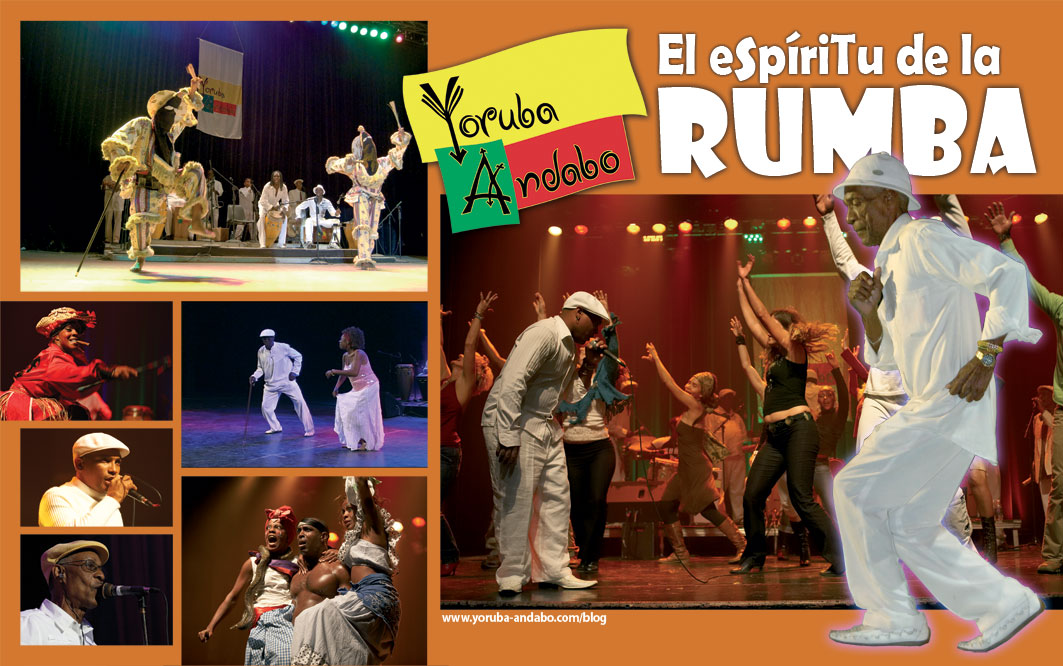
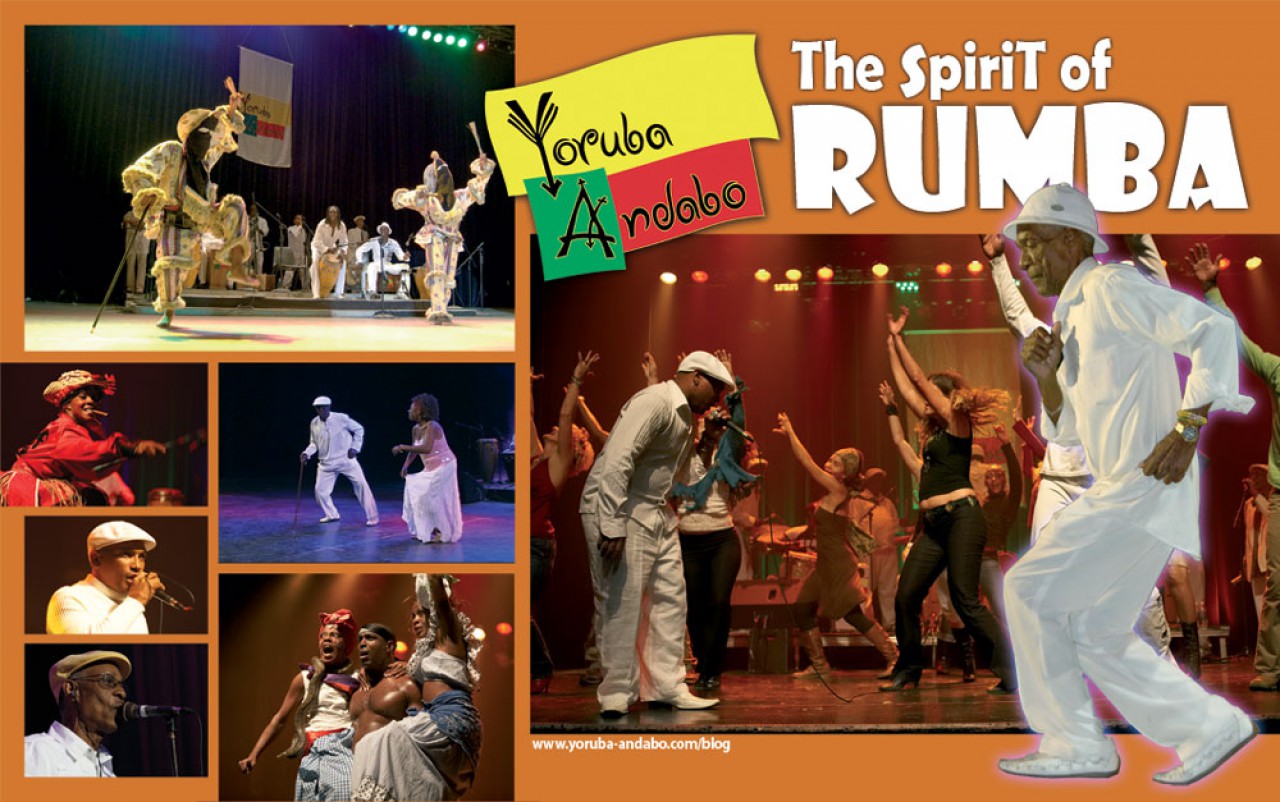
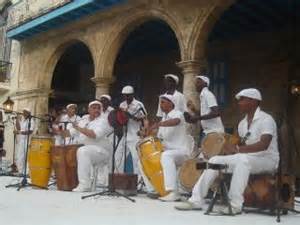
Yoruba Andabo is proud to be part of the third Havana World Music festival. Rumbatime!
Courtesy of and by Fox News Latino
Published November 25, 2015 EFE
The iconic funk rhythm band Earth, Wind & Fire will perform for the first time in Cuba during the third edition of the Havana World Music festival, organizers of the March 2016 event confirmed on Wednesday to EFE.
The U.S. band is scheduled to perform numbers from its most recent album “EW & Experience,” although additional details of their show remain to be specified.
Earth, Wind & Fire will head the list of bands at the third Havana World Music festival, which will also include the Mexican band Centavrvs, nominated for a Latin Grammy; Ellas, a trio of mariachis from Los Angeles; Spaniards Jorge Pardo and Lin Cortes, and Carolina Camacho from the Dominican Republic.
So far, the host country’s performers will include salsa band Havana D’ Primera, singer-songwriter Kelvis Ochoa, the Yoruba Andabo folk group and jazz newcomers Yissy & Bandancha, among others.
Havana World Music was launched in 2014 by Eme Alfonso as a result of his experience in a project to investigate the island’s ethnic-cultural origins.
According to the artist, the aim of the festival is to suggest to the young Cuban public “new sounds coming from different cultural areas,” which make the event a forum for disseminating alternative musical styles outside normal commercial routes.
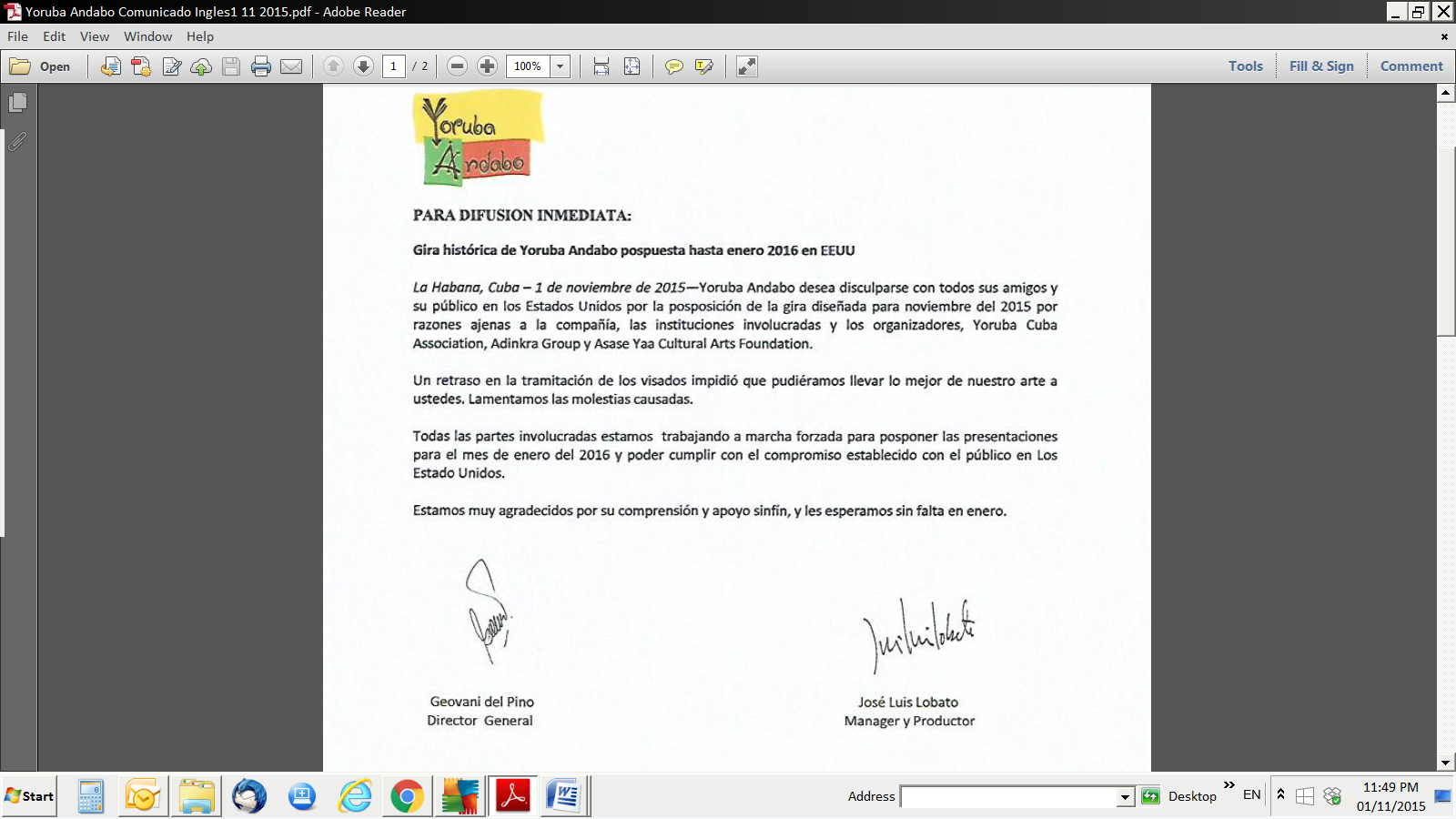
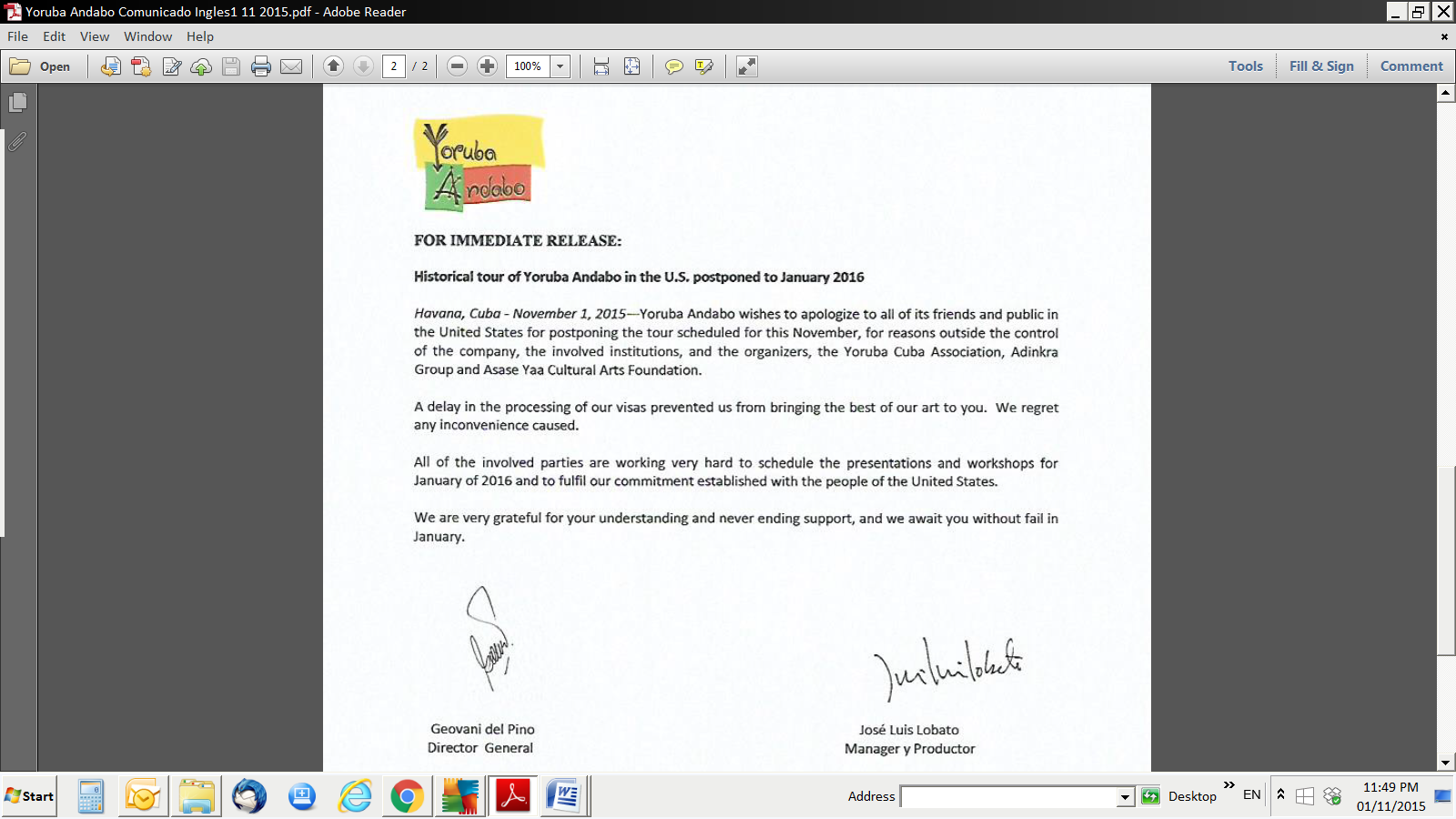
Historical tour of Yoruba Andabo in the U.S.A postponed to January 2016
Yoruba Andabo wishes to apologize to all its friends and public in the United States for postponing the tour scheduled for this November, for reasons beyond the control of the company, the involved institutions, and the organizers and promoters; The Yoruba Cuba Association, The Adinkra Group, and The Asase Yaa Cultural Arts Foundation.
A delay in the processing of our visas prevented us from bringing the best of our art to you. We regret any inconvenience caused.
All of the involved parties are working very hard to schedule the presentations and workshops for January 2016 and to fulfill our commitment established with the people of the United States.
We are very grateful for your understanding and never ending support, and we await you without fail in January.
Respectfully yours
Geovanni Del Pino – General Director
Jose Luis Lobato – Manager and Producer
Yoruba Andabo desea pedir disculpas a todos sus amigos y público en los Estados Unidos para posponer la gira prevista para este mes de noviembre, por razones ajenas a la voluntad de la empresa, las instituciones involucradas, y los organizadores y promotores; La Asociación Yoruba Cuba, El Grupo Adinkra y La Fundación Cultural Arts Asase Yaa.
Un retraso en la tramitación de los visados nos impidió traer lo mejor de nuestro arte para usted. Lamentamos cualquier inconveniente causado.
Todas las partes involucradas están trabajando muy duro para programar las presentaciones y talleres para enero de 2016 y para cumplir con nuestro compromiso establecido con el pueblo de los Estados Unidos.
Estamos muy agradecidos por su comprensión y apoyo sin fin, y les esperamos sin falta en enero.
Respetuosamente tuyo
Geovanni Del Pino – Director General
José Luis Lobato – Director y Productor
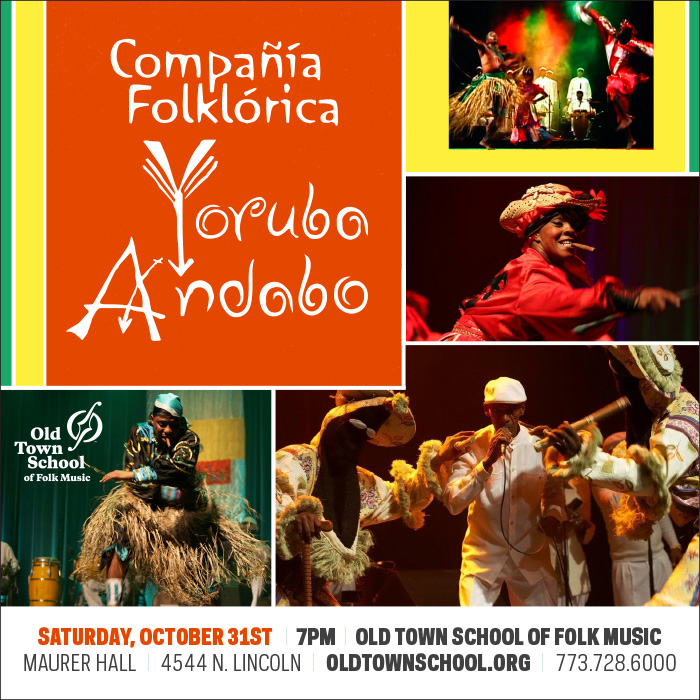
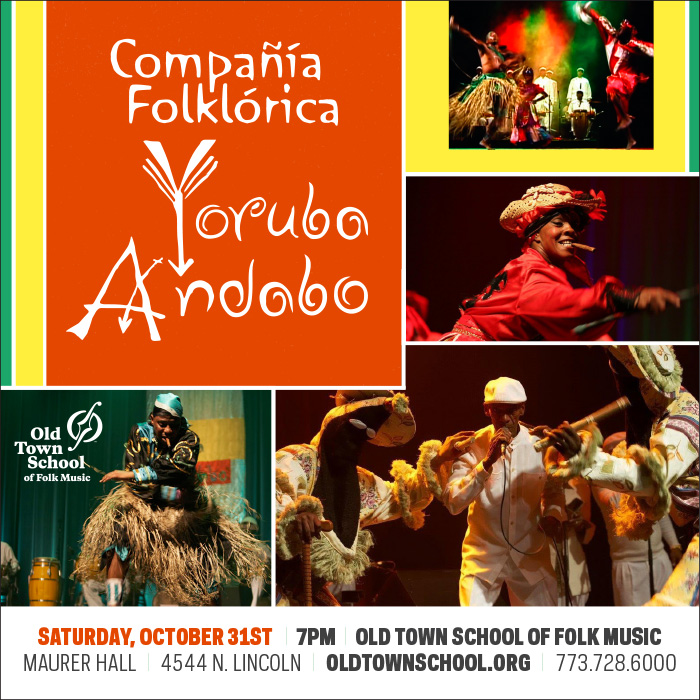
SAT 10/31 | Yoruba Andabo (Rumba) at Old Town School of Folk Music
Rumba is Cuban and without Cuba, there is no Rumba. As simple as that! Come and enjoy the rumba experience with Yoruba Andabo!
“The possibility of experiencing a night with Yoruba Andabo was a unique one.Unique since one can witness an incredible reunion between something sacred,mystic and an atavistic and inborn sense of partying. The audience was transported to a separate world, a world of intense colors, of full joy and beauty.If the roots are, undoubtedly African and ancient, the charm of today’s musicisan authentic wonder…”
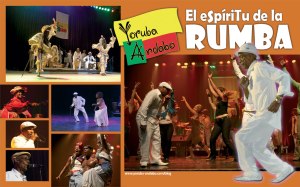
The Yoruba Andabo Company was born on the piers of the port of Havana in 1961 when a group of laborers would get together for parties and artistic events through their union. They gave rise to the Guaguanco Marítimo Portuario, a group which, in 1985, began their professional career with the name Yoruba Andabo. From that time forward, they have offered their art as…
View original post 170 more words
Yoruba Andabo with Coffee and Panela be presented at the Teresa Carreno | Correo del Orinoco
Este importante encuentro e intercambio entre sonidos afrocaribeños es promovido por el Ministerio del Poder Popular para la Cultura, la Fundación Teatro Teresa Carreño, el Fondo Cultural del Alba y la Embajada de Cuba
Source: Yoruba Andabo with Coffee and Panela be presented at the Teresa Carreno | Correo del Orinoco
Rumba Update: Yoruba Andabo is coming to the good old USA! Courtesy of and by The Adinkra Group


Courtesy of and by The Adinkra Group
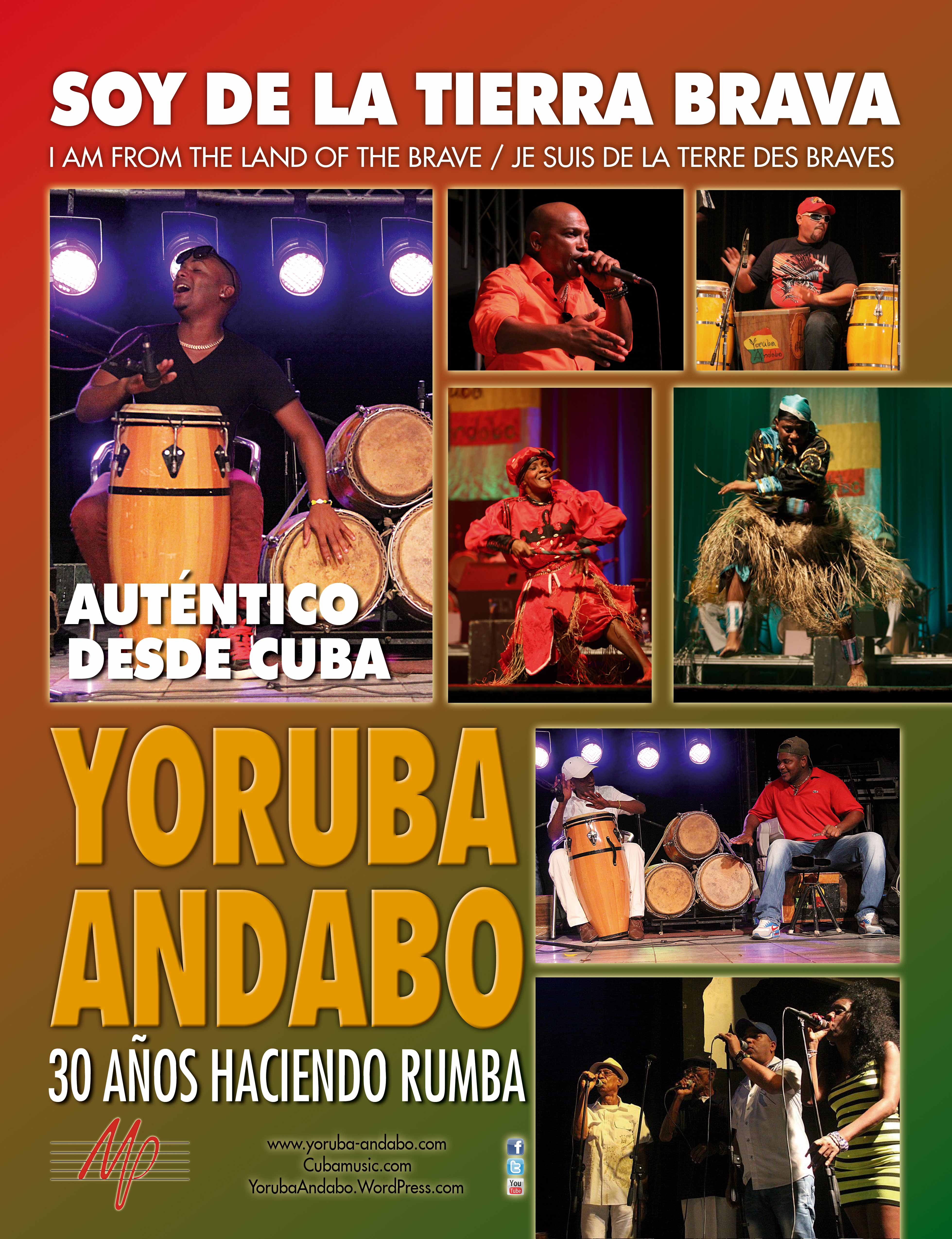
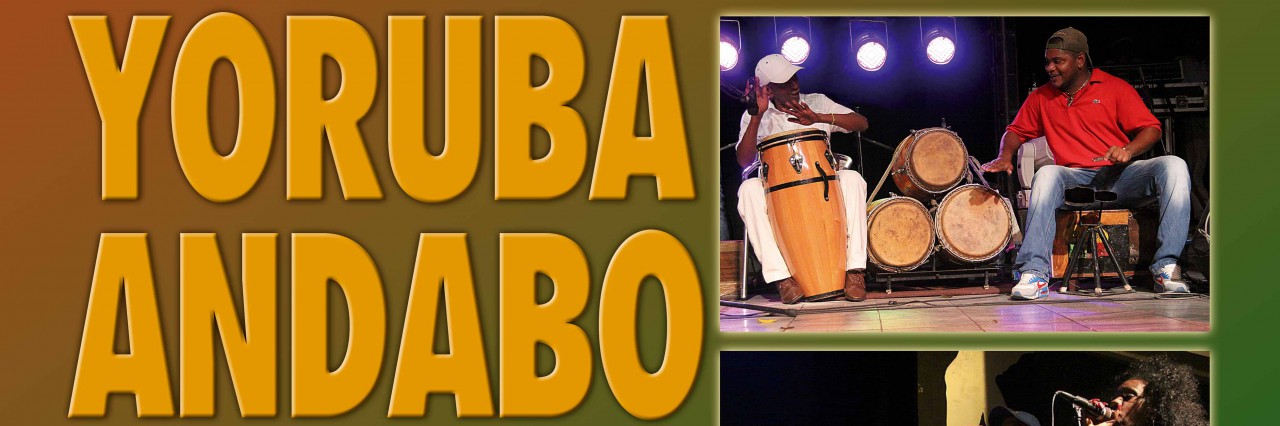
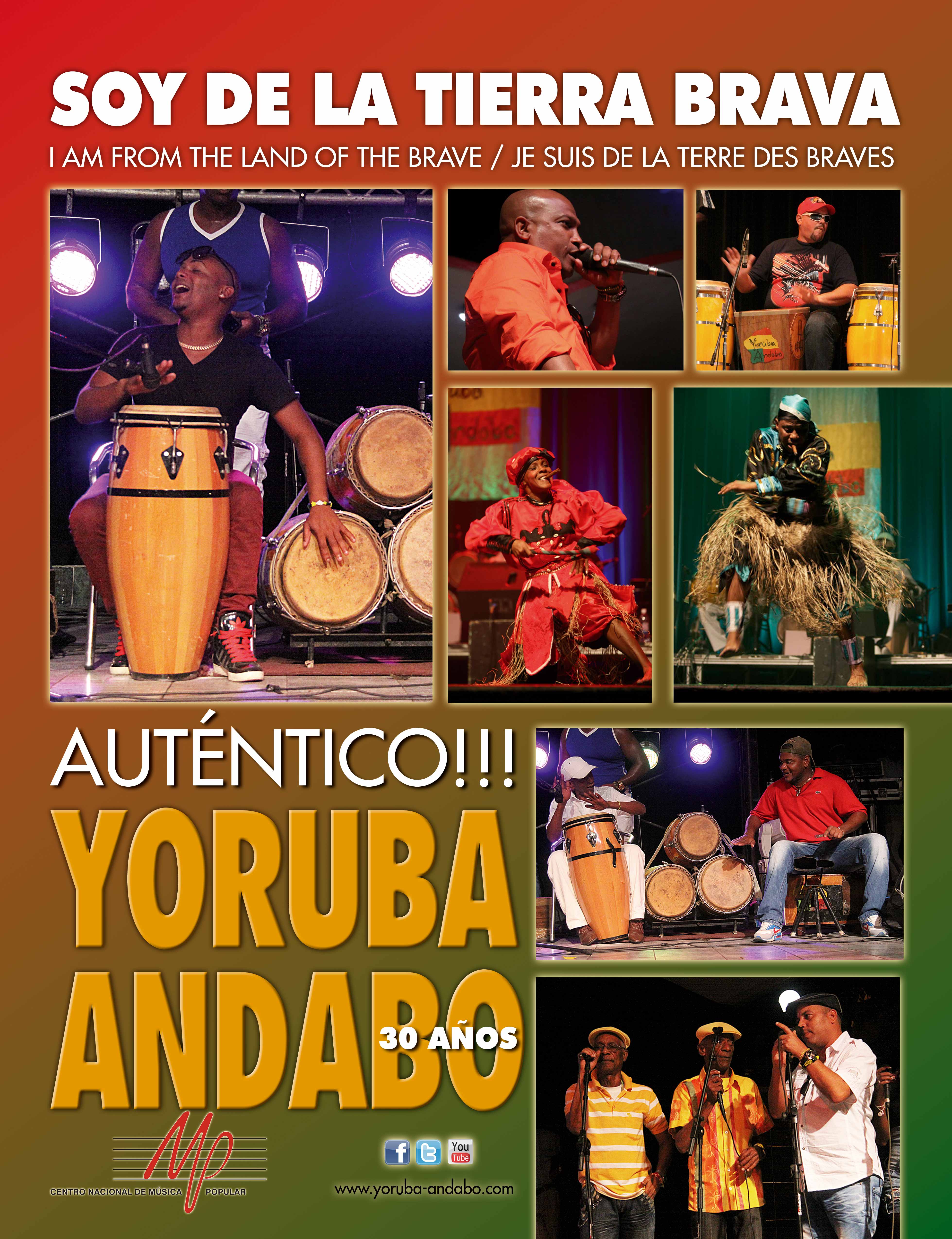
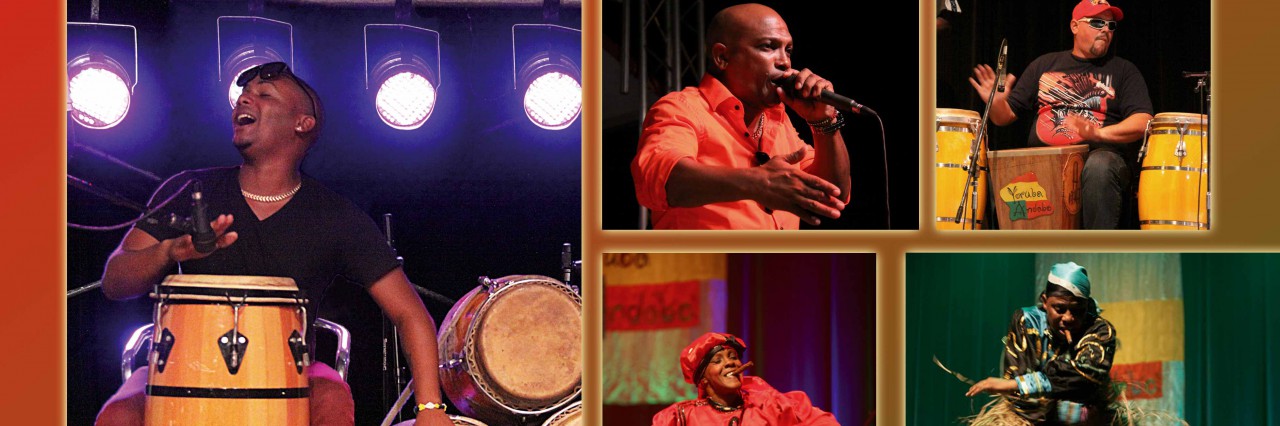
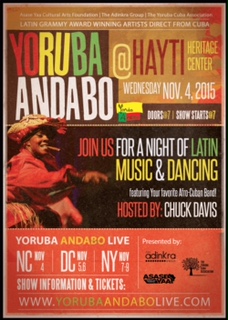
The Adinkra Group and Asase Yaa Cultural Arts Foundation, in partnership with the Yoruba Cuba Association, will present the legendary Afro Cuban band and Rumba masters, YORUBA ANDABO, for four newly added shows on its U.S. tour.
Celebrating 30 years of Afro Cuban culture, the internationally acclaimed band, live and direct from Cuba, will perform live in Durham, NC; Washington, DC; and New York City. They will conduct master classes and workshops on select dates, as well.
For tickets and more information, go to www.YourbaAndaboLive.com
Wednesday, November 4, 2015 – Concert
Hayti Heritage Center
804 Old Fayetteville Street
Durham, NC 27703
7:00 PM
—————————
Thursday, November 5, 2015 – Master Classes
Adinkra Cultural Arts Studio
3802-3808 34th Street
Mt. Rainer, MD 20712
6:30 PM
Drum, dance, and song workshops
—————————
Friday, November 6, 2015 – Concert
George Washington University’s Lisner Auditorium
730 21st Street, NW
Washington, DC 20052
7 PM
International Dance Party (After-Party)
DJ’s Jahsonic, Underdog, and Special Guests Yoruba Andabo
Cafe Asia
1720 I Street, NW
Washington, DC 20006
10 PM (Free with concert ticket stub before 11 PM)
—————————
Saturday, November 7, 2015 – Workshops
Asase Yaa Cultural Arts Foundation
1803 Fulton Street
New York, NY 11233
6:30 PM
Drum, dance, and song workshops
—————————
Sunday, November 8, 2015 – Rumba Dance Party
S.O.B.s
204 Varick Street
New York, NY 10014
8 PM
—————————
Monday, November 9, 2015 – Concert
Symphony Space
2537 Broadway
New York, NY 10025
8 PM
Co-presented by Ayanda Clarke of The Fadara Group and AKILA WORKSONGS, Inc.
Community Partner: Caribbean Cultural Center African Diaspora Institute (CCCADI).
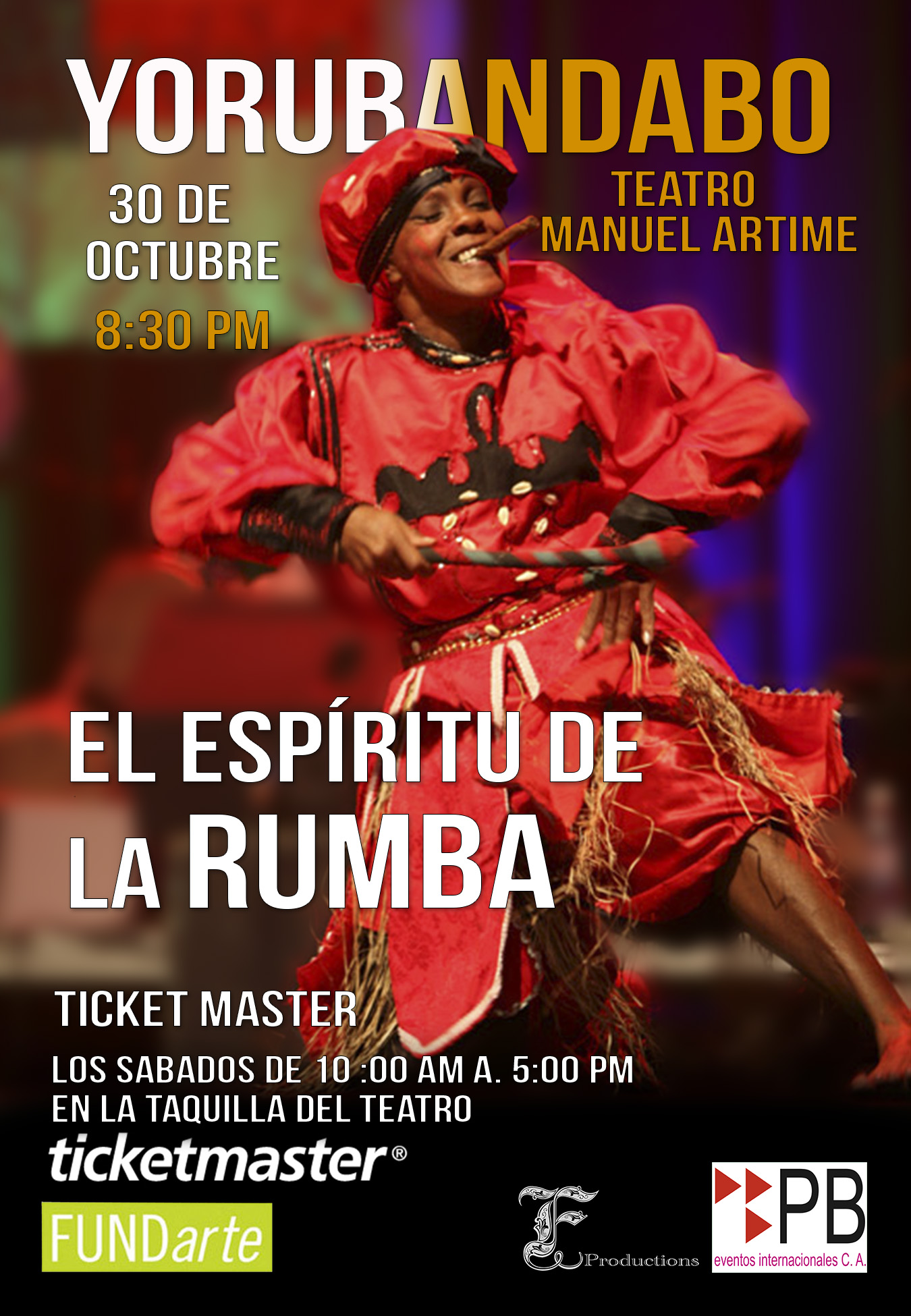
Autentico desde Cuba…Yoruba Andabo en Venezuela en El Célebre Teatro Teresa Carreño!
Yoruba Andabo se presentará el domingo 18 de octubre en el célebre teatro Teresa Carreño, en la ciudad de Caracas, Venezuela. Estrenará temás musicales de su nuevo album titulado Soy de la Tierra Brava.
Yoruba Andabo interpretará La Gozadera, tema musical del filme Havana Instant, en el cierre del concierto que brindara el domingo 18 de octubre en el célebre teatro Teresa Carreño, en la ciudad de Caracas, Venezuela.
nota: Zair/TELESUR grabará el lunes 12 octubre, un programa From Havana sobre Yoruba Andabo y cubrirá el concierto del domingo… Puede haber link con TeleSur!!
Yoruba Andabo will present a concert on Sunday, October 18th, at the famous Teresa Carreño theater in Caracas, Venezuela. We will be be performing the released tracks from our new album entitled” I am from the Land of the Brave.”
The Yoruba Anadabo group will also play the ” Gozadera”theme song of the film Havana Instant, at the close of the concert that is being offered on Sunday, October 18th at the famous Teresa Carreño theater in Caracas, Venezuela.
Note: Zair / Telesur will play on Monday, 12 October, on the program “From Havana” and it will cover the Yoruba Andabo concert of this Sunday …you may watch by linking with Telesur !!
Music of Cuba, courtesy of and by Autenticacuba.com
One hour east of Havana lies the port city of Matanzas, where rumba emerged in the late 19th century. Brought to Cuba by Africans who were transported to the island to work as slaves, rumba was created around a flamboyant and boisterous combination of Congolese-derived drumming styles and Spanish flamenco-singing influences. It has grown to become one of Cuba’s most important Afro-Cuban dance and music genres.
The rhythms of rumba have given rise to three very different forms of dance. Yambú is the oldest and slowest; it is rarely performed today. Guaguancó is a flirtatious dance, performed by couples. Columbia, the fastest and most athletic, is performed by a male dancer.
By the mid-20th century, rumba was merging with son to form the precursor of salsa. To many, rumba is more than a music and dance genre; it is the collective expression of the Creole nature of the island itself
The music of Cuba is largely based on its cultural origins in Europe and Africa. The arrival on the island of thousands of African slaves over the course of three hundred years created a wealth of new musical forms. Deeply rooted in African rhythms, the country’s distinctive music owes its melodic power to its Spanish colonial heritage. The lively, energetic Cuban sound has profoundly influenced musical styles throughout the world, an impact that continues to this day. Distinct dance forms, related to specific types of music, over time have cross-pollinated, evolving into new styles of expression.
Read more: http://autenticacuba.com/music/rumba/#ixzz3nSw1dFNB
Read more: http://autenticacuba.com/music/rumba/#ixzz3nSvjbGNp