Tonight courtesy of and by Catherine Beaton. Rumba and Poetry! Made for each other!

Source: Tonight

Rumba and Poetry! Made for each other!

Attachment-1cropped-posterwebenglish-2.jpg

We move slowly, together as one,
Nothing can come between us, not before we are done
In this dance of love, only the two of us
Twirling together in the busy world, just us
In the room full of people.

No one can see our eyes, yet they can all feel
Just how much you love me, how much
I love you. Dancing the rumba on a Thursday night,
What could be more perfect, more right?

LogoYorubaAndabo_letrasHorizontal(2)

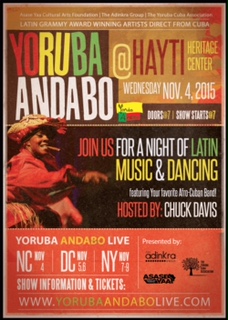
Rumba Update: Yoruba Andabo is coming to the good old USA! Courtesy of and by The Adinkra Group

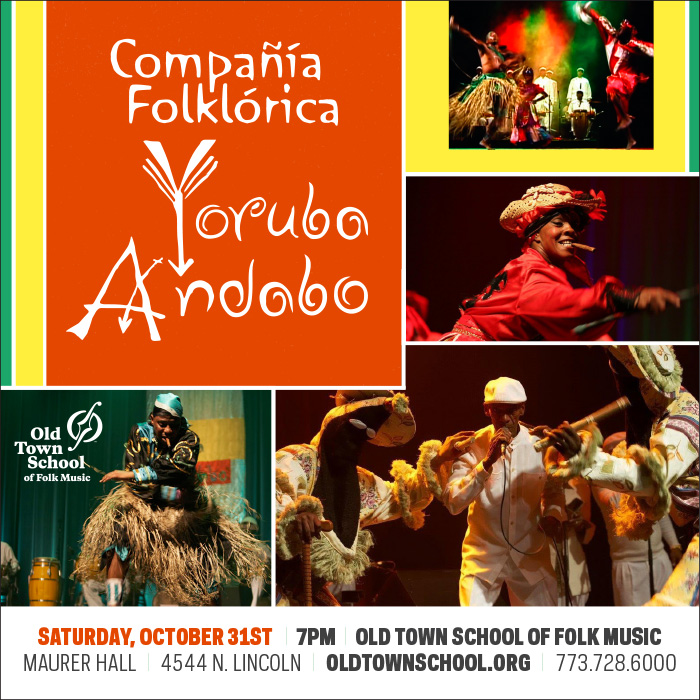
Attachment-1OTS_YorubaAndabo_ecard_082015YorubaCourtesy of and by The Adinkra Group

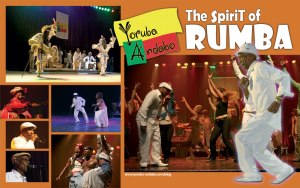
The Adinkra Group and Asase Yaa Cultural Arts Foundation, in partnership with the Yoruba Cuba Association, will present the legendary Afro Cuban band and Rumba masters, YORUBA ANDABO, for four newly added shows on its U.S. tour.

Celebrating 30 years of Afro Cuban culture, the internationally acclaimed band, live and direct from Cuba, will perform live in Durham, NC; Washington, DC; and New York City. They will conduct master classes and workshops on select dates, as well.

For tickets and more information, go to www.YourbaAndaboLive.com

Wednesday, November 4, 2015 – Concert
Hayti Heritage Center
804 Old Fayetteville Street
Durham, NC 27703
7:00 PM
—————————

Thursday, November 5, 2015 – Master Classes
Adinkra Cultural Arts Studio
3802-3808 34th Street
Mt. Rainer, MD 20712
6:30 PM
Drum, dance, and song workshops
—————————

Friday, November 6, 2015 – Concert
George Washington University’s Lisner Auditorium
730 21st Street, NW
Washington, DC 20052
7 PM

International Dance Party (After-Party)
DJ’s Jahsonic, Underdog, and Special Guests Yoruba Andabo
Cafe Asia
1720 I Street, NW
Washington, DC 20006
10 PM (Free with concert ticket stub before 11 PM)
—————————

Saturday, November 7, 2015 – Workshops
Asase Yaa Cultural Arts Foundation
1803 Fulton Street
New York, NY 11233
6:30 PM
Drum, dance, and song workshops
—————————

Sunday, November 8, 2015 – Rumba Dance Party
S.O.B.s
204 Varick Street
New York, NY 10014
8 PM
—————————

Monday, November 9, 2015 – Concert
Symphony Space
2537 Broadway
New York, NY 10025
8 PM

Co-presented by Ayanda Clarke of The Fadara Group and AKILA WORKSONGS, Inc.
Community Partner: Caribbean Cultural Center African Diaspora Institute (CCCADI).

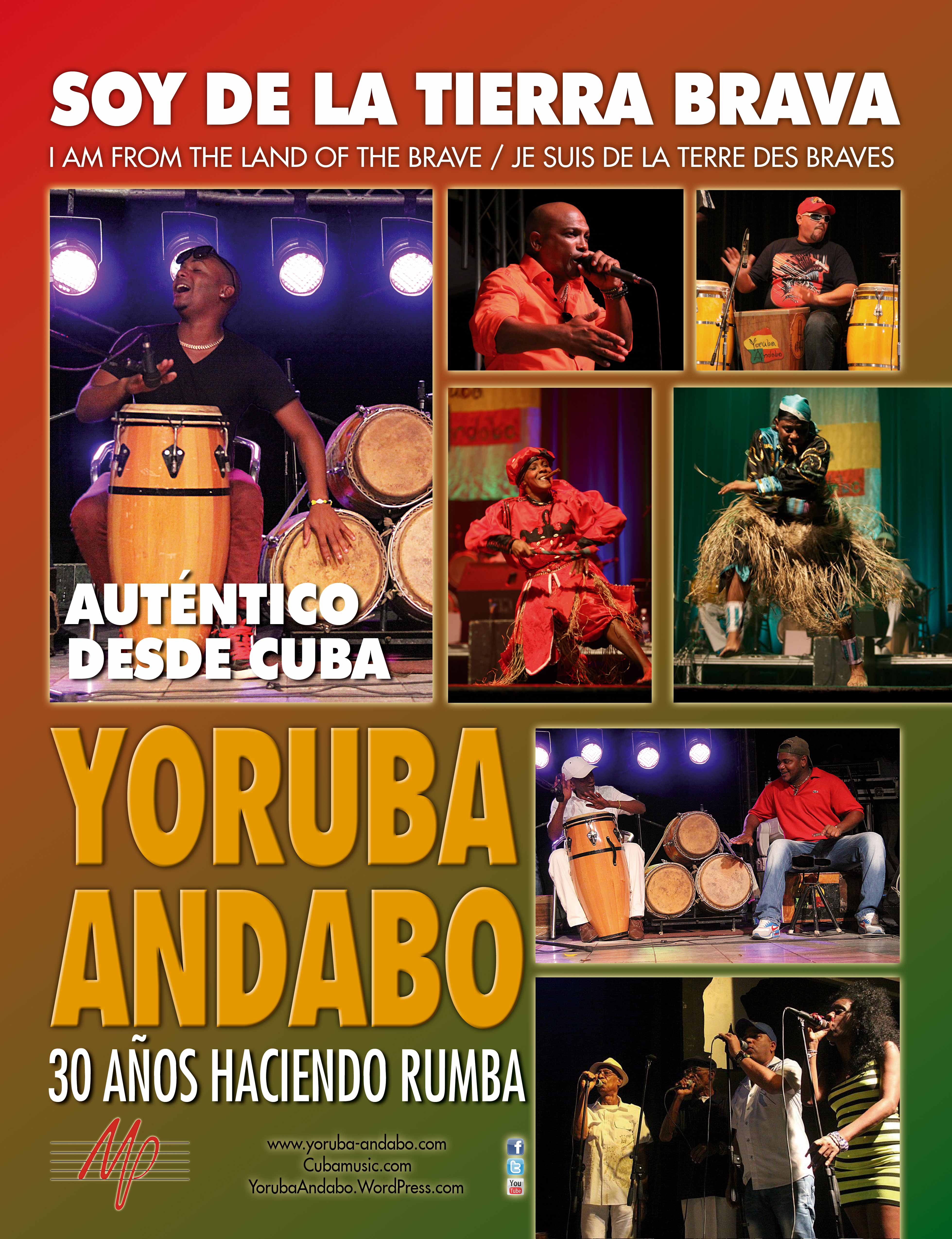
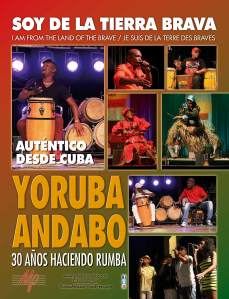
Autentico desde Cuba…Yoruba Andabo en Venezuela en El Célebre Teatro Teresa Carreño!

PosterYA

Yoruba Andabo se presentará el domingo 18 de octubre en el célebre teatro Teresa Carreño, en la ciudad de Caracas, Venezuela. Estrenará temás musicales de su nuevo album titulado Soy de la Tierra Brava.

Yoruba Andabo interpretará La Gozadera, tema musical del filme Havana Instant, en el cierre del concierto que brindara el domingo 18 de octubre en el célebre teatro Teresa Carreño, en la ciudad de Caracas, Venezuela.
nota: Zair/TELESUR grabará el lunes 12 octubre, un programa From Havana sobre Yoruba Andabo y cubrirá el concierto del domingo… Puede haber link con TeleSur!!

cropped-posterya.jpg

Yoruba Andabo will present a concert on Sunday, October 18th, at the famous Teresa Carreño theater in Caracas, Venezuela. We will be be performing the  released tracks from our new album entitled” I am from the Land of the Brave.”

The Yoruba Anadabo group will also play the ” Gozadera”theme song of the film Havana Instant, at the close of the concert that is being offered on Sunday, October 18th at the famous Teresa Carreño theater in Caracas, Venezuela.
Note: Zair / Telesur will play on Monday, 12 October,  on the program  “From Havana”  and it will cover the Yoruba Andabo concert of this  Sunday …you may watch by linking with Telesur !!

Music of Cuba, courtesy of and by Autenticacuba.com

OTS_YorubaAndabo_ecard_082015Yoruba

One hour east of Havana lies the port city of Matanzas, where rumba emerged in the late 19th century. Brought to Cuba by Africans who were transported to the island to work as slaves, rumba was created around a flamboyant and boisterous combination of Congolese-derived drumming styles and Spanish flamenco-singing influences. It has grown to become one of Cuba’s most important Afro-Cuban dance and music genres.

The rhythms of rumba have given rise to three very different forms of dance. Yambú is the oldest and slowest; it is rarely performed today. Guaguancó is a flirtatious dance, performed by couples. Columbia, the fastest and most athletic, is performed by a male dancer.

By the mid-20th century, rumba was merging with son to form the precursor of salsa. To many, rumba is more than a music and dance genre; it is the collective expression of the Creole nature of the island itself

The music of Cuba is largely based on its cultural origins in Europe and Africa. The arrival on the island of thousands of African slaves over the course of three hundred years created a wealth of new musical forms. Deeply rooted in African rhythms, the country’s distinctive music owes its melodic power to its Spanish colonial heritage. The lively, energetic Cuban sound has profoundly influenced musical styles throughout the world, an impact that continues to this day. Distinct dance forms, related to specific types of music, over time have cross-pollinated, evolving into new styles of expression.

Read more: http://autenticacuba.com/music/rumba/#ixzz3nSw1dFNB

Read more: http://autenticacuba.com/music/rumba/#ixzz3nSvjbGNp

Yoruba Andabo Begins North American Tour with Miami and Chicago!

YorubaOTS_YorubaAndabo_ecard_082015cropped-cropped-posterwebenglish-22.jpg

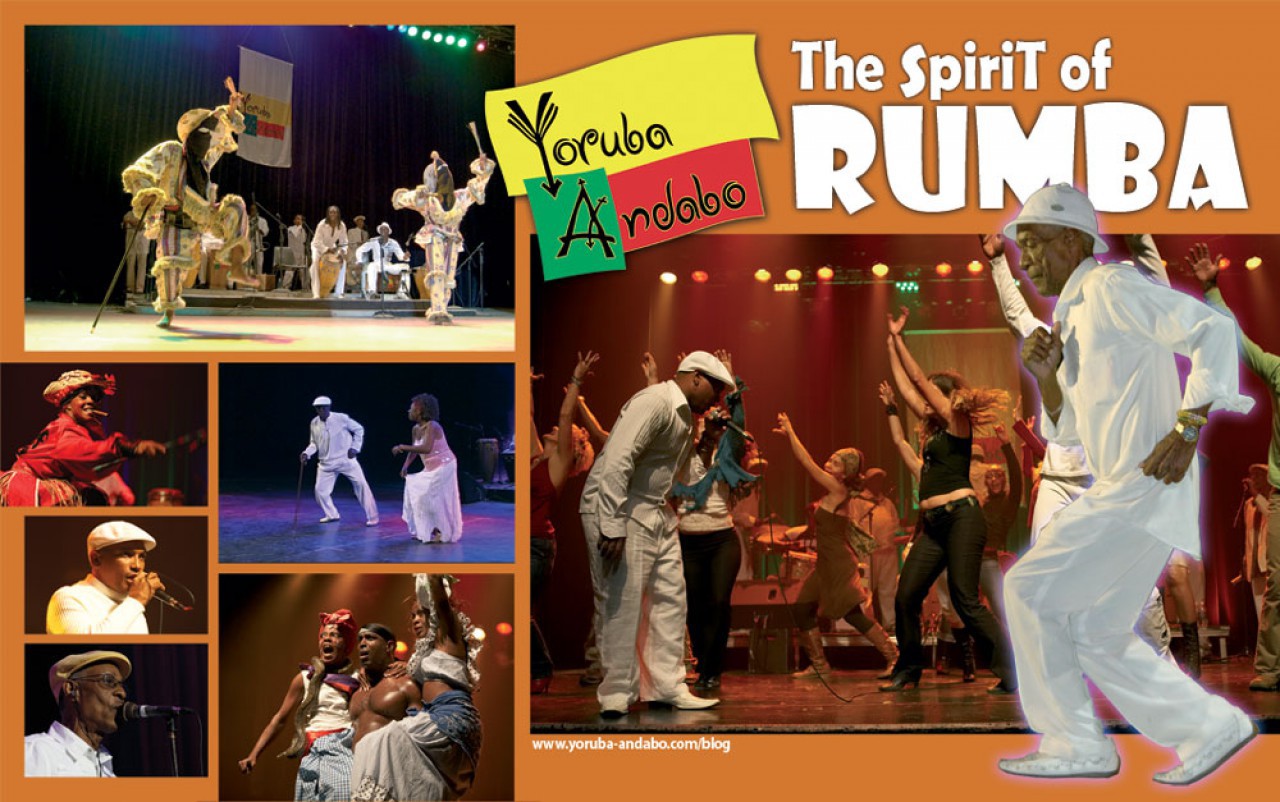
Rumba is Cuban and without Cuba, there is no Rumba. As simple as that! Come and enjoy the rumba experience with Yoruba Andabo!

“The possibility of experiencing a night with Yoruba Andabo was a unique one.Unique since one can witness an incredible reunion between something sacred,mystic and an atavistic and inborn sense of partying. The audience was transported to a separate world, a world of intense colors, of full joy and beauty.If the roots are, undoubtedly African and ancient, the charm of today’s music isan authentic wonder…”

Laurent Aubert, director of the Ethno-musicologist Cultural Center in Geneva

Enjoy the rumba experience withYoruba Andabo!

yoruba andabo conciertoastral_205Oggun

http://www.arteyvidachicago.com/sounds-of-rumba-with-yoruba-andabo/

Origin of Rumba- Courtesy of and by Sonny Watson (streetswing.com)

http://www.streetswing.com/histmain/z3rumba.htm

PosterYAShango

Uploaded by #guarachon63

Origins of the word Rumba (Room-Bah) was a generic term used to describe a music style rather than a dance style. The Ballroom Rhumba that is danced today is not really the “Rumba of Cuba.” The Ballroom Rhumba of today is really an offshoot of the “Son” (slower) or “Danzon” (even slower)” done in Cuba, a much slower and polite version of the true, sexually “frantic” (& FAST) Rumba and also can be considered Afro-cuban. The “Son” was a popular middle class Cuban dance which is a modified version of the Rumba … and the danzon’ is even a slower version than the Son.

    Originally, it is said that the real Rumba came to Cuba through the African Slaves (Afro-cuban) imported from Spain into that country over two hundred years ago. Cuba eventually banned the dance as being too wild to dance in public. Eventually the law was forgotten about and some people started dancing it which helped people become more aware of the dance during the 1920’s and by 1925 President Machado put the ban back into effect, his decree stated: “this class of music (referring to African music) and the ‘rumba’ are contrary to the good custom and public order of Cuba.” However it was reported that the upper classes in Cuba did not dance the Rumba anyway, as it was to wild and frantic.

   The Son is played in two parts (chorus and verse) while the Son dancers only dance to the chorus. The Claves (instrument) create the mood of the dance. However, it may have been originally a Pantomimic dance of Africa that found its way to Cuba (Afro-Cuban.) The son as a music began to take shape in the latter half of the 19th century in Cuba’s Orient province, and gave birth to several hybrids including the afro-son, guajira-son, son-pregón and son-montuno. The son is perhaps the most important form at the root of today’s popular salsa music. After a period of change and development here in the States, the Son evolved into a popular sensual couples dance known today as the “Rumba.”

Uploaded by #guarachon63

“From “La Rumba” (1978, dir Oscar Valdés)
Interview with Saldiguera & Florencio Street, Columbia performance by the Port of Cardenas, featuring dancer Machaco.”

  Today there are three distinct styles of rumba done in Cuba with the dance primarily being danced as a freestyle or solo (non-lead and follow) dance. The first being called the “Guaguancó,” which is a seduction between the man and woman whereas he can try to get carnal and “attack” her. The second is the “Yambú” which has a flirty woman dancing with a older man (man can be young too) who cannot get carnal or “attack” her and finally the more polite “Columbia” which is more the traditional “Rooster and Hen” dance where the male struts his masculinity around and about the female.” The early Cuban Rumba can at times look like Cha-Cha and Mambo.

Lew Quinn and Joan Sawyer are said to have tried the first real attempt at introducing the Rumba to Americans as far back as 1913, followed by Emil Coleman in 1923 and by Benito Collada in 1925 at a club called “El Chico” in Greenwich Village. In 1929 a small interest was growing in Latin-American music and in 1930 a Nuevos Ritmo (new rhythm) song called “The Peanut Vendor” by Don Azpiazu’s Havana Casino Orchestra was released which became a hit as a new DANCE to American dance forms.

By the 1930’s all of America had become knowledgeable of Latin music and the Rumba. The “American Rumba” of today as written about earlier is a version of the son that Quinn and Sawyer tried to introduce years ago. Today it is known as a “Latin-Ballroom” couples dance (lead and follow) and correctly titled the Dance Of Romance.” The American and International styled Rumba’s can be a very beautiful dance when done by a polished couple.

   Many of the erotic movements of the Ballroom Rumba stemmed from the original dancers of Cuba doing the tasks of the day such as “Shoeing the Mare,” “Doin’ the Laundry/Dishes,” “Climbing a Rope,” or the “Courtship of Barnyard Fowls.” The costumes that many performers originally wore, represented this in the woman’s long ruffled train of her skirt (hens feathers) or the mans ruffled shirt sleeves and or chest which represents the cocks hackle feathers. Today’s latin costumes look more like Lingerie. The Ballroom Rumba is a nice dance for dancers to showcase their technique ability and a polite sensuousness and romantic flair on a dance floor, whereas the Cuban rumba is more a rhythmic street dance and can appear to be of a cool, yet hectic and sometimes wild abandon with the technique more about the rhythm, roots and soul of the dance, rather than being a commercially pretty dance form.

    The Jamaican Mento dance closely resembles the Rumba. The Rumba was replaced in popularity by the Mambo, and later the Cha-Cha. The Rumba is sometimes spelt as Rhumba and Roomba.

   Also a new dance (c.1975) called the Night Club-Two Step (NC-2) was originally known as “Disco Two Step” (ala Buddy Schwimmer) is a modern semi-version of the Rumba, (a few say samba), it is done to modern slow music by pop artists such as Madonna, etc. NC-2 is mainly done in the West Coast Swing and Country Western communities.

cropped-artistyoruba.jpgcropped-posterya.jpg

El film Havana Instant tiene como tema de presentación el track La Gozadera, de Yoruba Andabo…

Source: El film Havana Instant tiene como tema de presentación el track La Gozadera, de Yoruba Andabo…

Havana Instant / A Moment in Havana, film directed by Guillermo Ivan (Mexico / Cuba) and filmed entirely in the city of Havana, Cuba in a co-production between Mexico, Colombia, Cuba and the United States, was awarded on September 7 at the 39th Montreal World Film Festival in which had its world premiere to a full house.


<meta name="twitter:card" content="summary_large_image">
<meta name="twitter:site" content="@YorubaAndabo1">
<meta name="twitter:creator" content="@YorubaAndabo1">
<meta name="twitter:title" content="El film Havana Instant tiene como tema de presentación el track La Gozadera, de Yoruba Andabo…">
<meta name="twitter:description" content="Havana Instant / A Moment in Havana, film directed by Guillermo Ivan (Mexico / Cuba) and filmed entirely in the city of Havana, Cuba received a standing ovation by the audience at the 39th Montreal World Film Festival.">
<meta name="twitter:image" content="https://yorubaandabo.com/wp-content/uploads/2015/08/cropped-posterya1.jpg?w=300&h=100">


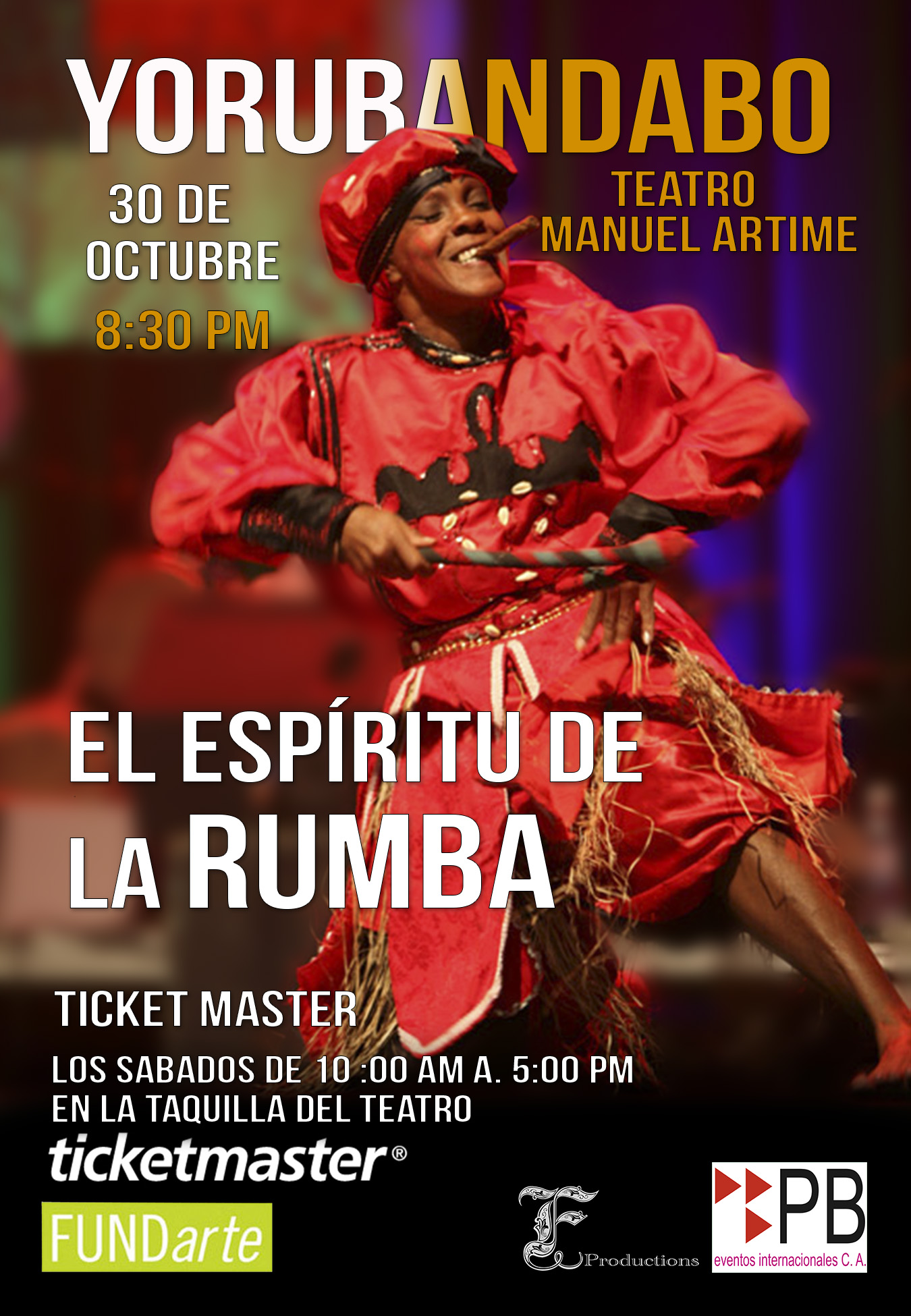
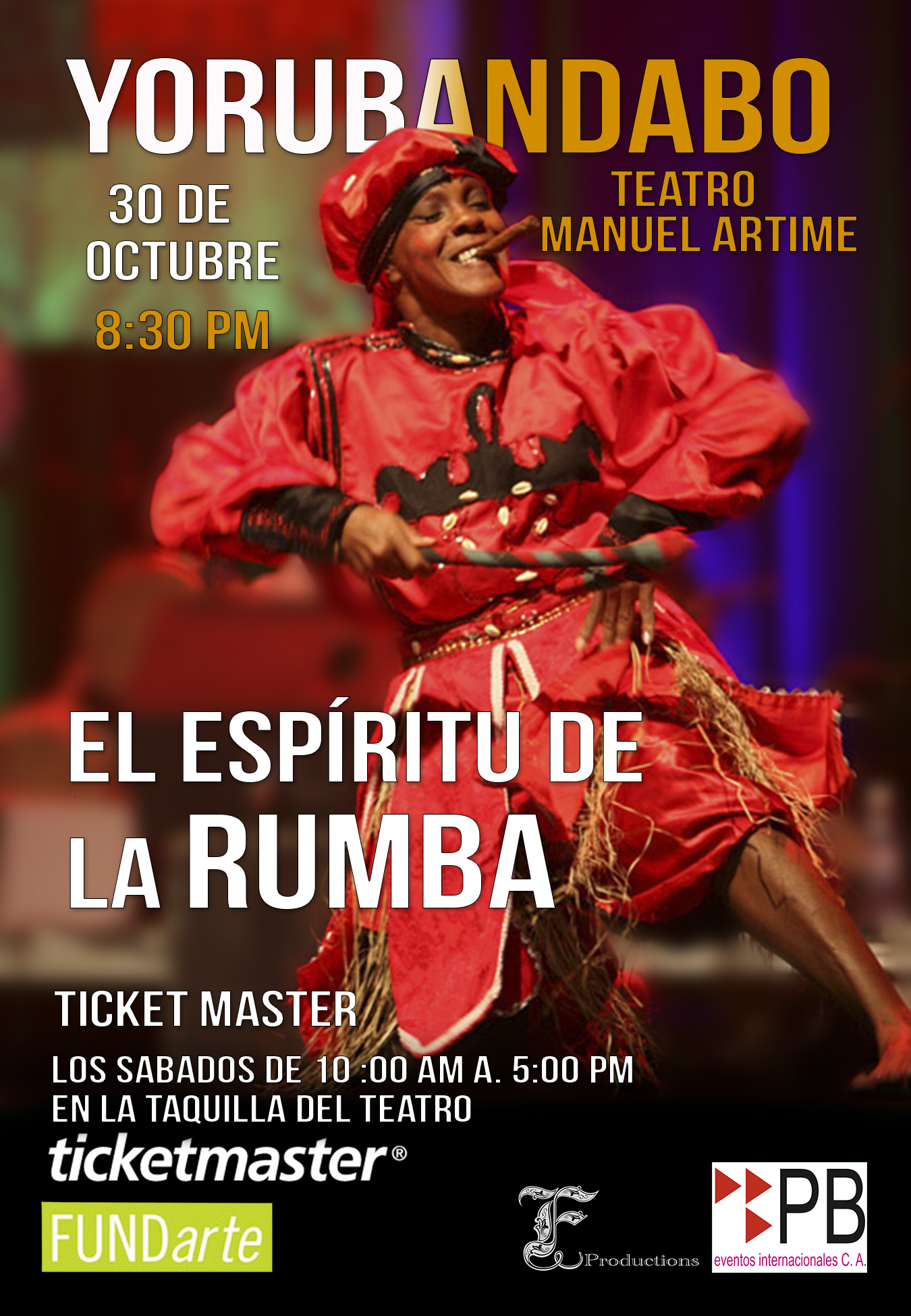
Yoruba Andabo en el Teatro Artime en Miami! Corre la noticia!

http://miami.eventful.com/events/yoruba-andabo-/E0-001-086682584-4

yoruba-andabo-01

http://www.manuelartimetheater.com/pages/calendar/event_detail.asp?eventId=1911

Courtesy of Prensa Latina

http://multimedia.prensa-latina.cu/unanoticia.php?mmn=166

Founded in 1961, Yoruba Andabo enjoys a special rapport on and off the island, as is a true example of authenticity and versatility to take on folk and popular traditions, from the great diversity of Cuban culture.

With a hallmark, the cast grown dissimilar genres that make up the African roots on the island as the Congo, Yoruba, Abakuá and called Rumba complex, with its traditional rhythms, especially yambú cycles, guaguancó and columbia, creating contemporary sounds and voices.

The spirit of Santerí­a dances on: Courtesy of and by Tony Montague

The spirit of Santerí­a dances on
by Tony Montague

http://www.straight.com/article-115429/the-spirit-of-santeria-dances-on

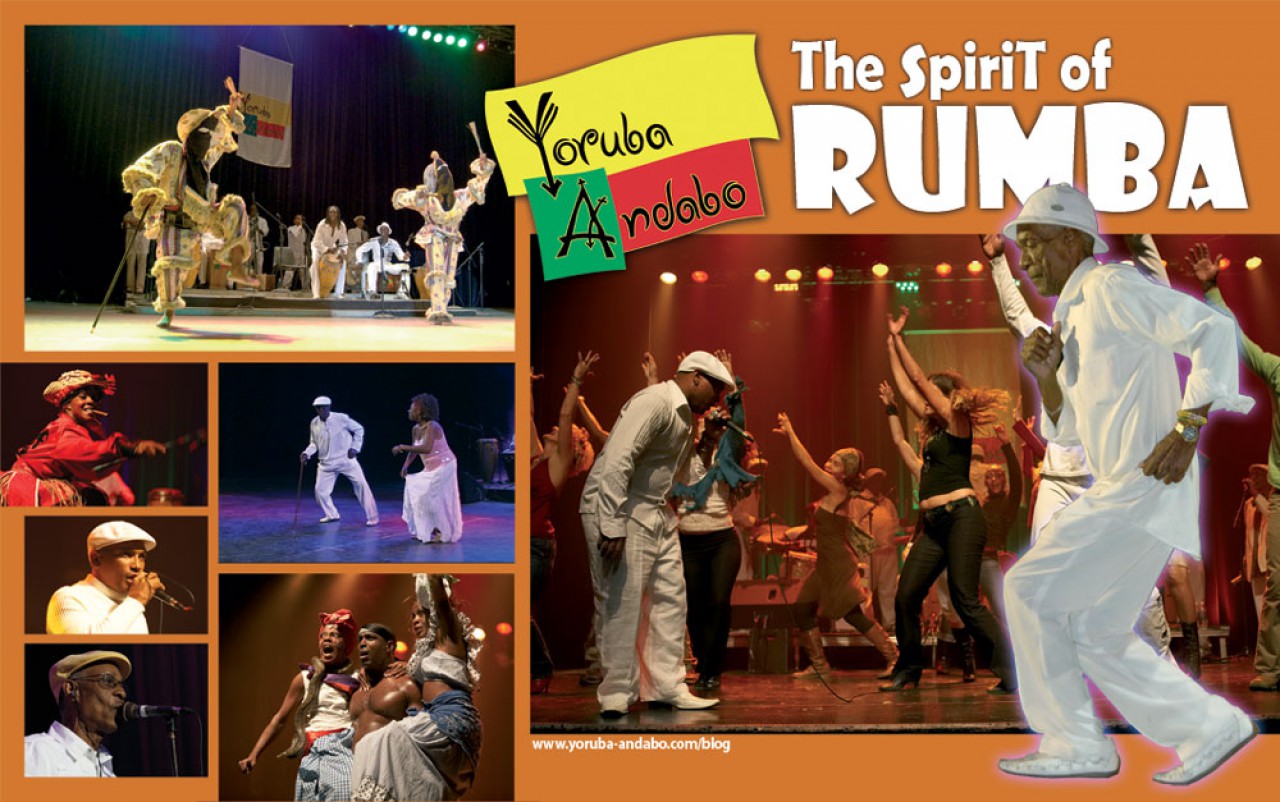
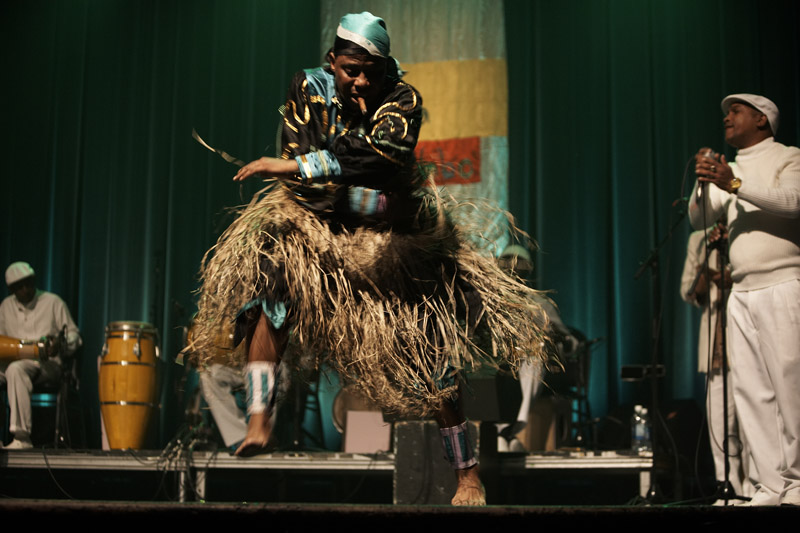
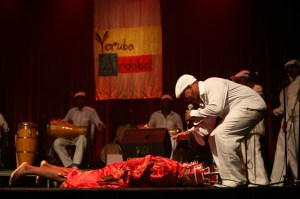
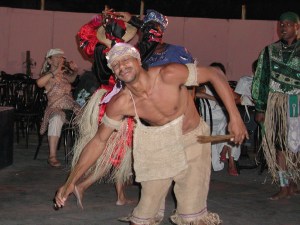
When members of Yoruba Andabo perform the rumba gua ­guanc, you can expect feathers to fly. The ritualistic Afro-Cuban dance represents the courtship of a rooster and a hen. To intricate drum rhythms and call-and-response chants, the male performer attempts to catch his partner off guard touching her crotch with the flick of a handkerchief or thrusting his limbs and pelvis at her provocatively while the female symbolically protects herself with hand or skirt.

Yoruba Andabo Promocion Venezuela verano 2015posterWebEnglish (2)
“The guaguanc is the most popular form of rumba, which was created in the ports of Matanzas and Havana, where most of us come from,” says Matí­as Geovani del Pino Rodrí­guez, singer, director, and cofounder of the 15-piece Yoruba Andabo ensemble. “It has always been an important part of what we do. The company started out in 1961 as Guaguanc Marí­timo Portuario a group of dockworkers who got together to perform at a labour festival.

“But our interest was not only in rumba,” continues Rodrí­guez. “We wanted to celebrate all aspects of our Afro-Cuban heritage, which is rich and complex. When the slaves were shipped across the Atlantic, all they took with them was their music, their dance, and their religious beliefs. They maintained these traditions through centuries of repression by concealing their activities, often in ingenious ways. Since the [1959 Cuban] revolution, Afro-Cuban culture has come out in the open, and is now experiencing a major revival.”

YorubaAndabo1MedYorubaAndabo2Med

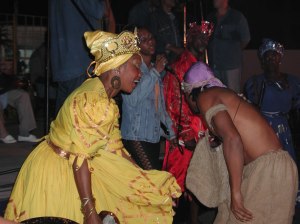
At the heart of the mesmerizing spectacle that Yoruba Andabo  presents is the dance and music of Santerí­a, a religion rooted in West Africa, and among the Yoruba people of Nigeria in particular. Its initiates venerate orishas (or santos), spirits similar to the gods and goddesses of ancient Greece. In Cuba, the slaves fused these orishas with Catholic saints, in whose name and image they could be worshipped. Sometimes genders were crossed: Chang & the orisha of manhood, fire, thunder, and lightning was equated with St. Barbara, probably because, like hers, his emblematic colours are red and white.

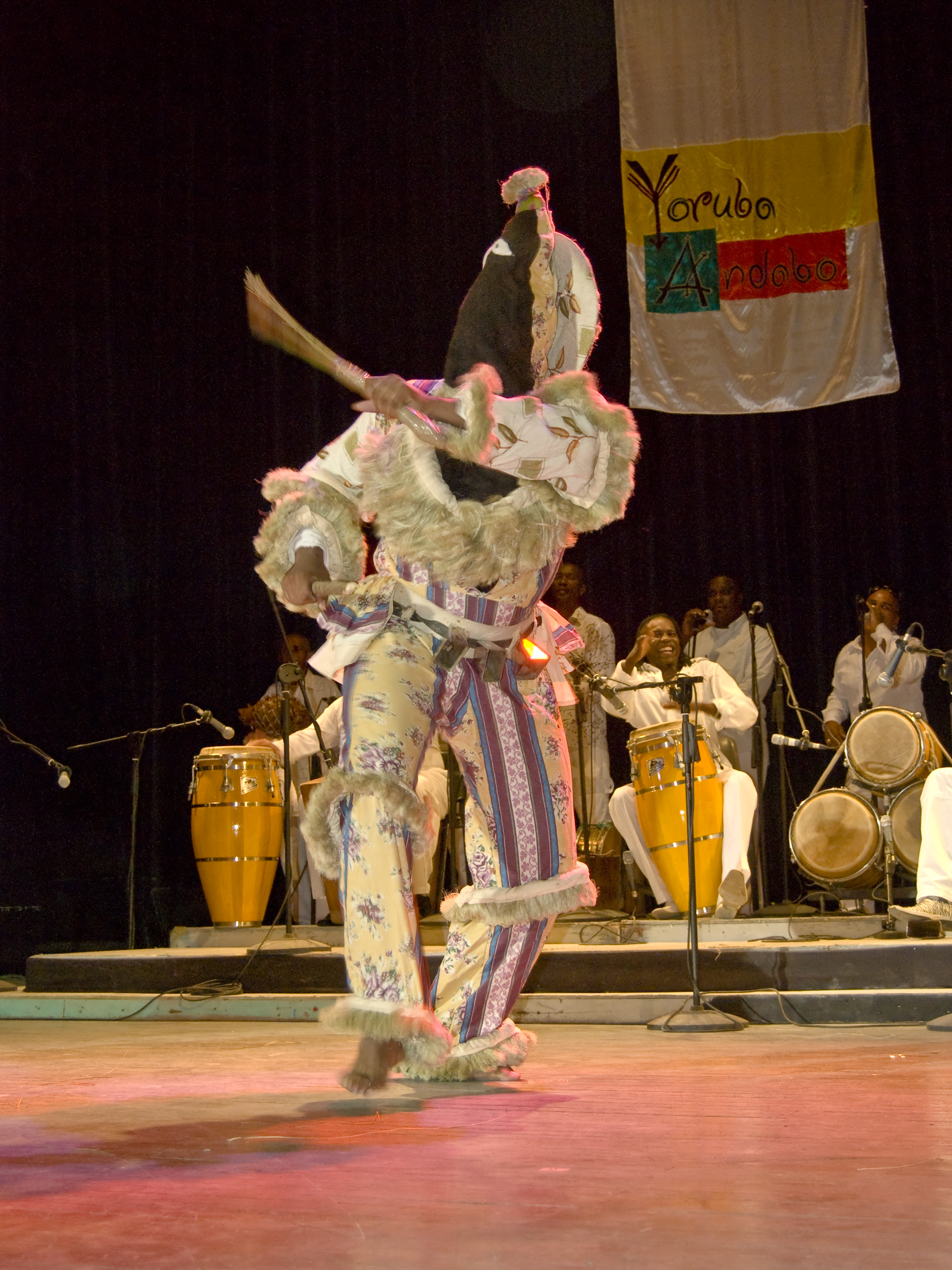
“All of the orishas have their own colour, dress, and symbols as well as their own ritual dance, chant, and toqué [rhythm],” Rodrí­guez explains. “We present the most important deities: Elegguá, Oggún, Ochún, Yemayá, Babalú, Chang, and Obbatalá. The dancers perform solo, and express the particular qualities of each orisha. Their movements are based on tradition, though these are not precisely choreographed the dancer follows the rhythms played by the drummers, who in turn follow the chant of the leader and chorus.”

The company Yoruba Andabo has a long-standing link with the arts scene in Canada. In 1993, it earned a Juno for contributing to jazz saxophonist Jane Bunnett’s Spirits of Havana.

“We are travelling all over the world, and keeping our Afro-Cuban arts and culture alive,” says Rodrí­guez. “This is why we are called Yoruba Andabo, because in the Carabalí­ language [of Nigeria], andabo means ‘a friend or admirer,’ and we are all friends and loyal followers of the Yoruban religion. It sustains us, just as it sustained our ancestors.”

http://www.cubamusic.com/Store/Album/010897/yoruba-andabo/el-espiritu-de-la-rumba

Rumba group Yoruba Andabo celebrates 30 years with new release in 2015 -COURTESY by: Rafael Lim

Friday, 20 March 201

Rumba group Yoruba Andabo celebrates 30 years with new release in 2015

by: Rafael Lim

http://http://www.cuba50.org/?page=newsitem&article=779

Yoruba AndaboYoruba Andabo

Rumba, which was born long ago in slave barracks, cane field settlements and urban tenements, is heard today in the world’s most prestigious venues, such as New York City’s Carnegie Hall.

Rumba does not go out of style and the Cuban genre is now experiencing its greatest popularity, an explosion no less surprising than the group Yoruba Andabo.

Yoruba Andabo was featured as a special guest on the discs La rumba soy yo (2001 Latin Grammy) and Tremenda rumba, by Maracas y Nueva Visión, nominated for a Grammy in 2003

Many of the group’s tracks have made the hit parade charts of Cuban radio, not to mention Cuban stages, especially La gozadera, with the powerful earthy voice of lead singer, or akpwón, Ronald González, backed up in the choruses by Jorge Luis Hernández.

Yoruba Andabo holds a peña (a short, informal concert) every Sunday at the Galiano Casa de la Música, whiich is always filled to capacity, well before it begins at 5:00 pm. Group leader Geovani del Pino has attracted rumba as well as salsa lovers, and is now preparing a Saturday afternoon peña at the Las Vegas cabaret.

“It’s like a fever,” an international visitor tells me, “The fury for rumba in Cuba is amazing.” A great number of tourists are intent upon seeing a performance of the genre, considering it a kind of musical reflection of the country.

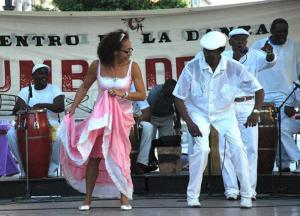
f0006921

Traditional or folkloric music has often been viewed as “museum” music, reserved for specific events, but visitors want to know Cuba’s most authentic, original music.

Yoruba Andabo’s producer tells me that the Cuban label Bis Music will release the groups new disc, Cántalo y báilalo como yo, while Del Pino recalls that the group made a huge splash at New York City’s music mecca, Carnegie Hall, November 30, 2012.

Tickets were selling for $300, three months before the concert, which was the first by a Cuban rumba group at such a prestigious venue, and the spectacle was expected to be of the highest level.

“We performed Yoruba music and rumba. We prepared the “Orishas de la rumba” segment, in which we performed batá with Iyesá. We included Guaguancó, Columbia, Yambú and Conga. As a special we offered a rumba version of El necio by the singer-songwriter Silvio Rodríguez who had sung this song at the Manhattan theater.”

Yoruba Andabo arrived at Carnegie Hall as part of the Festival of Latin American Voices, along with Cuban musicians Chucho Valdés, Aldo López Gavilán and Dayami González.

The group recently performed in London’s Barbican Centre, during the Nations Dance/ Cuba50 Festival, in which the renowned Cuban bands Orquestra Aragón and Los Van Van also participated.

Yoruba is the name of an extensive area in West Africa, and Andabo, in the Carabalí language means friend, follower or admirer, reflecting the rumberos aspiration to be something like the followers of Yoruba culture.

The group was born on the docks of Havana Bay in 1961, when a group of workers got together to create the Maritime Port Guaguancó. In 1985, they took the name Yoruba Andabo and began their professional work performing during the Peña del Ambia (Eloy Machado) at the Union of Cuban Writers and Artists (UNEAC).
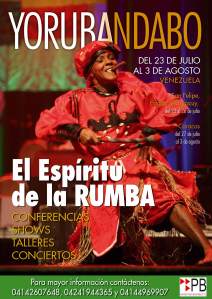
Yoruba Andabo Promocion Venezuela verano 2015

Yoruba Andabo Promocion Venezuela verano 2015

Ten years later, during the height of the Cuban salsa boom, they became the Yoruba Andabo Folkloric Company, composed of 17 singers, percussionists and dancers. They cultivated different genres of rumba, both secular and religious, with a rich, broad repertory including a Congo cycle, a broader Yoruba and Abakuá one, as well as rumba based on the most traditional rhythms such as Bambú, Guaguancó and Columbia.

Its music is enriched with carefully studied and executed choreographies, which incorporate Cuba’s longstanding Carnival conga tradition.

Yoruba Andabo has performed across the country and around the world, at renowned venues such as Colombia’s Teatro Colón; Harbourfront Centre in Toronto; and Aaron David Hall in New York; and has shared the stage with Tata Güines, Pablo Milanés, the Buena Vista Social Club, Chucho Valdés, Joe Arroyo, Lázaro Ross, Gonzalito Rubalcaba, Grupo Olodum, Niche, Diablos Danzantes de Oaxaca, Maracas, Celeste Mendoza and Cuba’s National Symphony Orchestra.
Yoruba Andabo was featured as a special guest on the discs La rumba soy yo (2001 Latin Grammy) and Tremenda rumba, by Maracas y Nueva Visión, nominated for a Grammy in 2003.

In 2006, the group received two nominations from the Academy of Traditional Music, in the Best Album and Best Audiovisual categories, for its CD-DVD Rumba en La Habana… con Yoruba Andabo, which was also nominated for Cubadisco 2006 awards.

This year, the group is making plans to celebrate its 30th anniversary, September 24, looking to a bright future for rumba which was declared a component of Cuba’s Intangible National Heritage in 2012, and continues to influence a variety of other genres including salsa and timba.

Link to original article here

Read review and buy CD Yoruba Andabo: El Callejon de los Rumberos here

Buy DVD Rumba en la Habana con Yoruba Andabo here

Buy CD La Rumba Soy Yo here

Cuba 50 is supported by the
Cuban Ministry of Culture, Cuban Embassy, ComoNo, Music Fund for Cuba, Cuba Solidarity Campaign, Unison, Unite, Thompsons Solicitors, Cuban Tourist Board and business, community and cultural organisations based in the UK and Cuba.

Click here to visit our supporters

Cuba50 logo thanks to Phill Pennington, image used in logo thanks to James Sparshattwww.capitalculture.eu